
ALEJANDRO JIMENEZ: Watts Up? Understanding Estonia’s Electricity Market
Electricity is the world's most volatile commodity. Here is the playbook to stop reacting and start planning.
After a 23-year career in finance, I spent over a year running Enefit’s energy trading desk. This experience gave me meaningful insights into electricity markets and energy production.
I have since returned to finance to launch my own private credit investment firm, but I’d like to share my learnings with heavy electricity consumers — such as factory operators, building owners, data centre junkies, etc.

Why should you care about electricity?
Understanding electricity markets is vital for controlling costs and preparing for price volatility. Sound strategies protect companies, while poor preparation could even lead to bankruptcy.
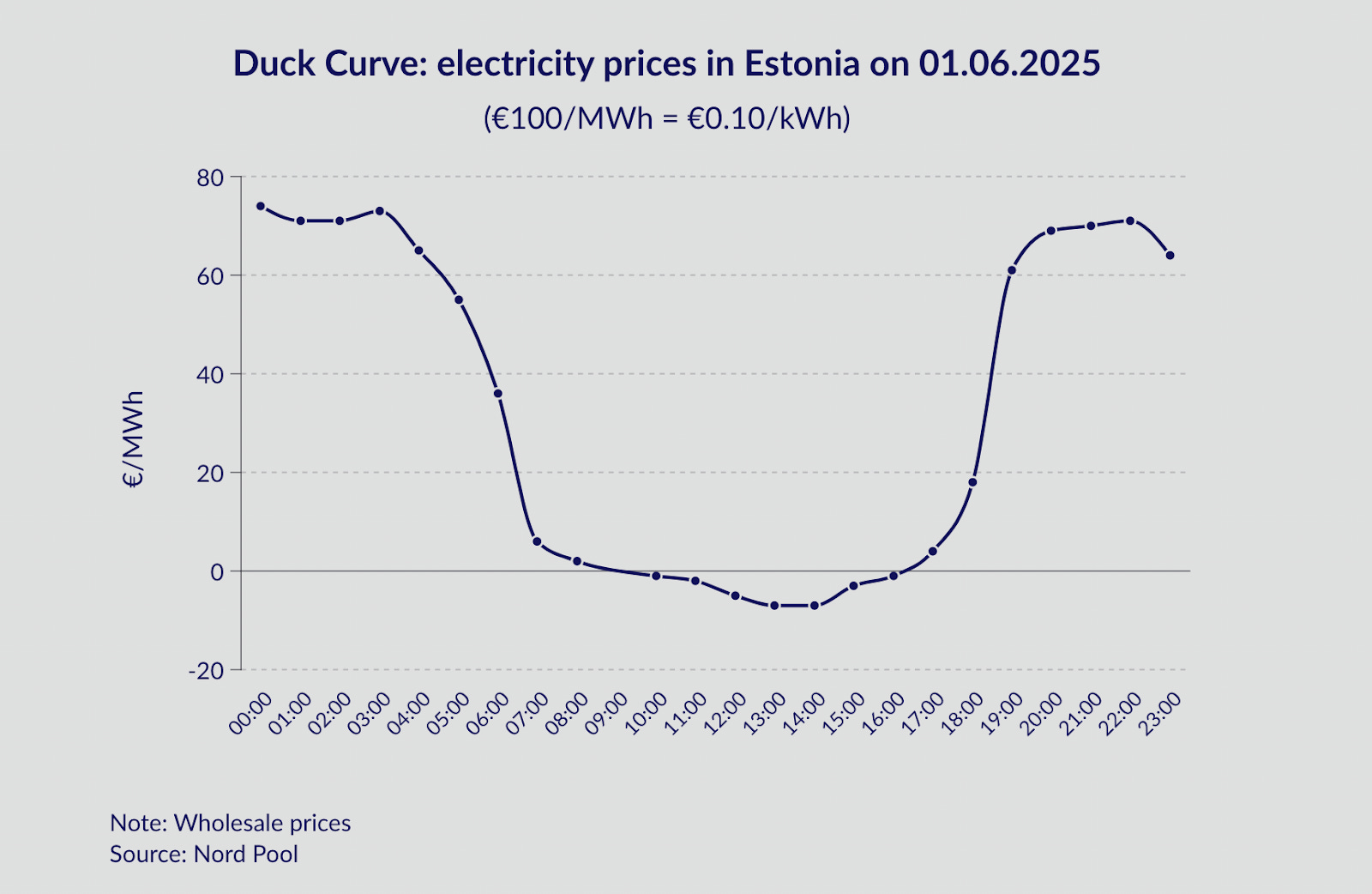
Electricity is the most volatile commodity on the planet. What other asset moves from a high of €74 to a low of -€7 (yes, negative) and back to €71 within hours? This actually happened last June and many other times, popularizing the term Duck Curve.
I’ll explain shortly why the Duck Curve happens, particularly during beautiful Estonian summers.
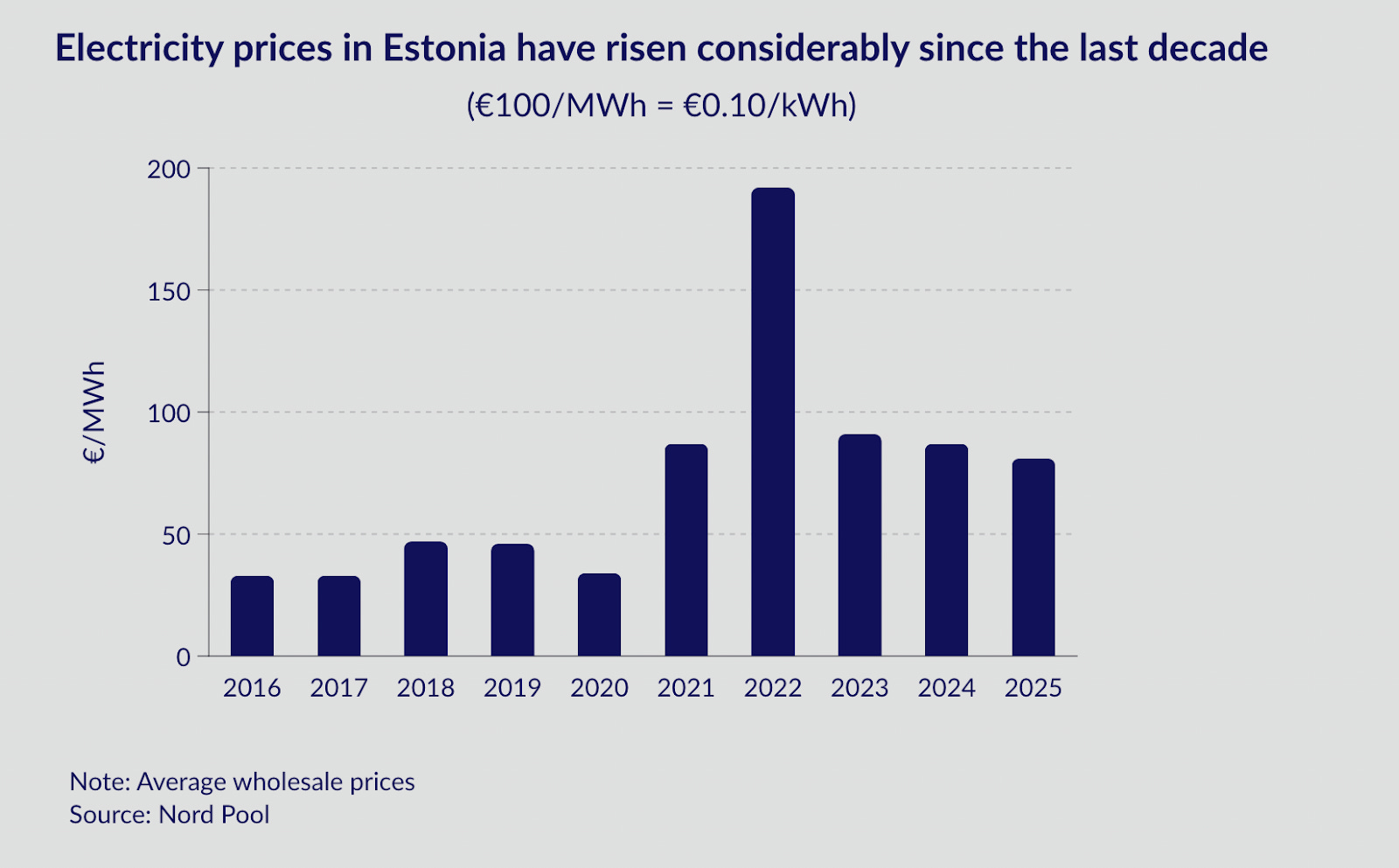
What is the state of Estonia’s electricity market?
Estonia’s electricity sector has dramatically shifted toward renewable energy over the last decade.
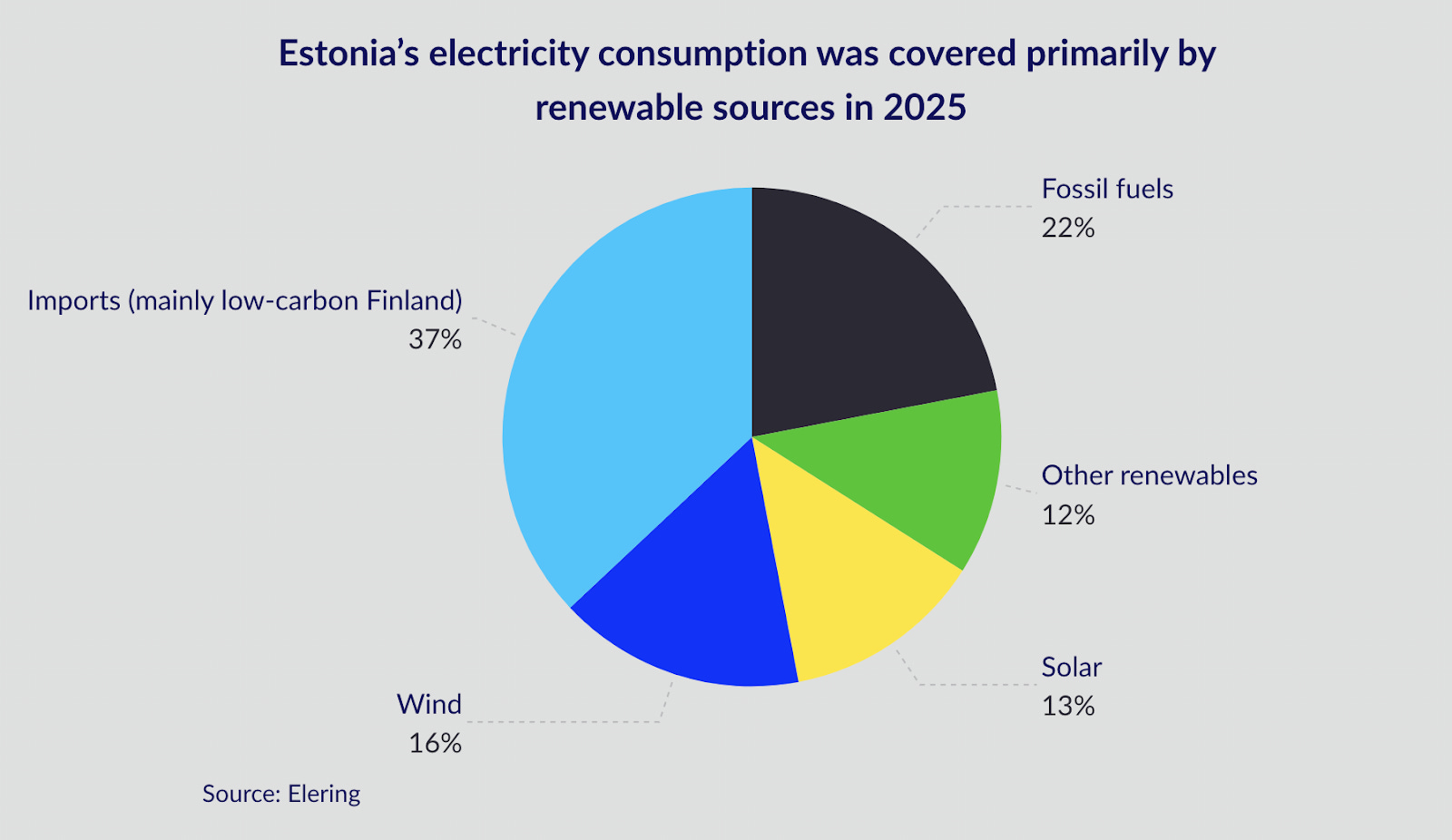
In 2016, production from fossil fuels, like oil, covered more than 100% of the country’s electricity consumption needs.
Today, roughly 70-75% of Estonia’s consumption is covered by low-carbon sources. Local renewables like wind and solar cover 41% of consumption, while another 37% is covered by imports, mainly from Finland, whose sources are 89% low-carbon.
Estonia’s energy system today is far more diversified and greener. Thanks in part to gigantic parks like Enefit’s Sopi-Tootsi, whose combined wind and solar production cover nearly 10% of Estonia’s electricity needs, and Sunly’s in-development Risti solar farm, whose whopping 350,000 solar panels will electrify 55,000 households.
However, this also makes Estonia far more dependent on the weather. When the wind isn’t blowing and the sun isn’t shining, the electricity supply drops. This leads to higher prices.
How are electricity prices determined?
Prices are set based on supply and demand in 15-minute intervals. To be more technically precise, the price is set by the marginal supplier — the last bit of electricity needed to meet demand — and specifically by that supplier’s marginal cost.
Let’s look at a simple and hypothetical example:
Suppose demand is 1,000 megawatts (MW) at a given moment. Of that, wind and solar can supply a maximum of 990 MW at their cheapest available price of €50/MWh (5 cents/kWh). This means another source must supply the 10 MW shortfall at the next-cheapest available price. An oil plant steps in to supply the missing 10 MW, but its lowest available price is €200/MWh because it must cover high production costs.
The price for the entire 1,000 MW is therefore set at €200/MWh, as the last clearing price determines the final price for the entire period.
This may seem odd at first glance. However, this clearing price mechanism helps solar and wind producers make a profit, as they can also sell at the much higher price of €200. In theory, this extra profit incentivises them to build even more solar and wind capacity. There’s certainly truth to this.
However, it has also led to extremely volatile prices, particularly in the summer. When the sun is shining, solar oversupply pushes prices to near zero. At sunset, this supply disappears, and fossil-fuel power plants take over, generally increasing prices significantly at night. This creates the Duck Curve shown above.
Why is fossil fuel electricity so much more expensive?
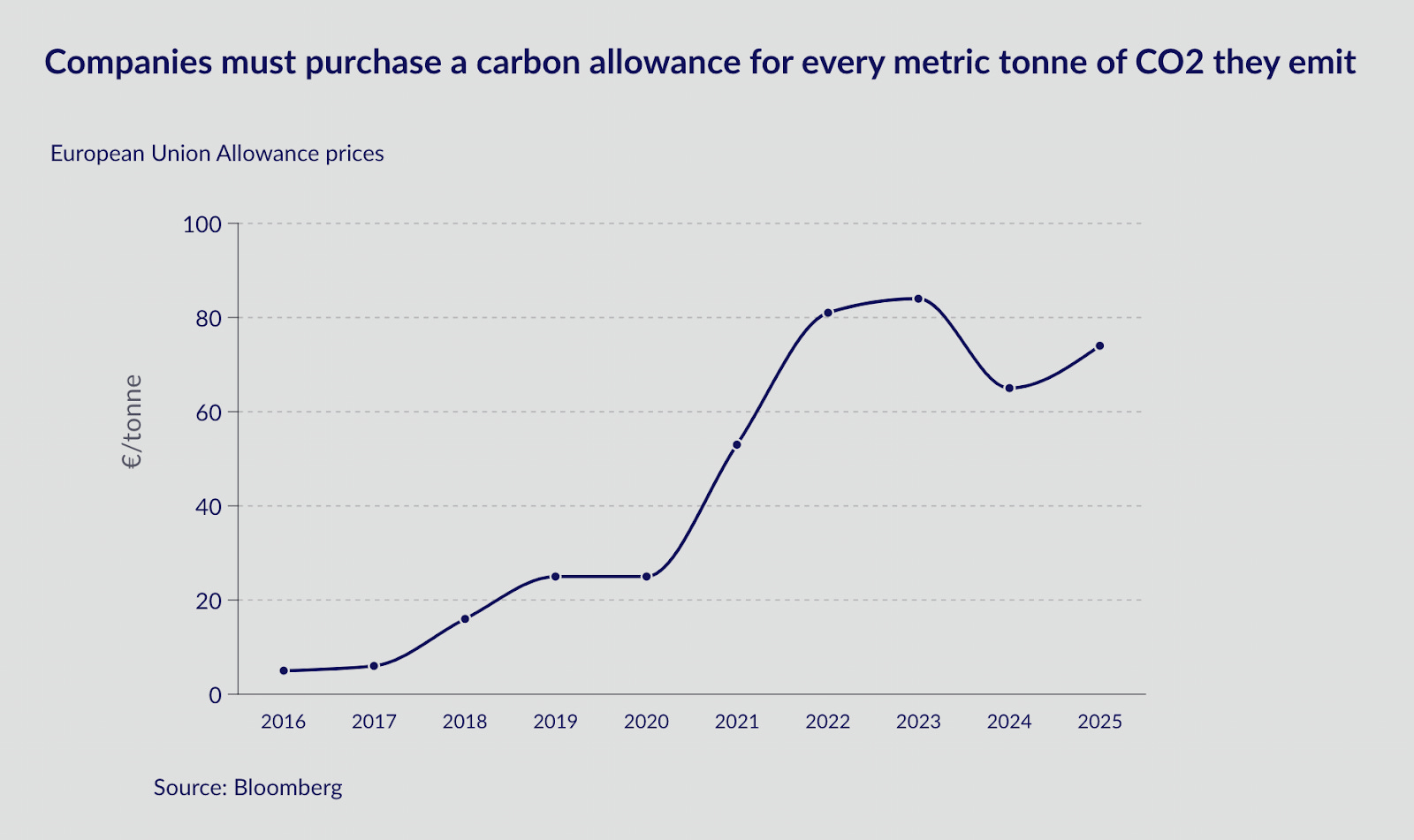
As part of its green goals, the EU requires companies to buy one EU Allowance (EUA) for every metric tonne of carbon dioxide (CO2) they emit. The EU’s aim is to put a market price on CO2 and incentivise emission reductions.
Fossil fuels are CO2-intensive, especially oil and coal, whereas renewable energy is not.
It’s estimated that EUAs account for up to 70% of an old fossil plant’s marginal cost.
EUAs are good for the environment, but bad for electricity prices as Estonia currently lacks other reliable, cheap energy sources when the wind isn’t blowing, and the sun isn’t shining.
So everybody’s happy when prices are low?
As a consumer, yes.
As a solar or wind producer, it’s complicated.
Low prices are squeezing renewables producers. Estonia has built so much solar and wind supply that, when the sun shines and wind blows, the market floods with energy and prices collapse. Producers begin “cannibalising” the very price levels they depend on to earn back their investment.
Unlike a fossil-fuel plant, a wind farm generally cannot increase production to capitalise on high electricity prices. This is typically because the very lack of wind is often the cause of the elevated prices.
The weather still remains beyond human control.
How effective are batteries for storing excess energy production and releasing it when needed?
A partial fix to gain control is batteries.
Batteries don’t create electricity — they move it through time. They soak up cheap energy when the system is flooded with wind or solar and release it when the market needs it. In theory, they help smooth price spikes.
This won’t solve the entire problem as they can only store energy for a few hours, meaning they can’t provide electricity during consecutive cloudy days. However, storage times are improving.
January electricity bills were very high
The average Estonian wholesale electricity price in January was €154/MWh (15.4 cents/kWh). High heating demand, little sunlight, snow-covered solar panels, weak wind, frozen wind turbines, rising natural gas prices, and plants under maintenance all contributed to either high prices or a supply shortfall that required turning on the more expensive fossil fuels.
Until the region adds more flexible capacity that can be cheaply “turned on and off” — whether that’s batteries or CO2-efficient gas plants — to complement the impressive buildout of wind and solar assets, these tight-weather price spikes are likely to remain a feature rather than a bug.
Estonia is moving in the right direction, but suffering from growing pains along the way.
Actionable thoughts (not investment advice!)
- Monitor Nord Pool prices one day ahead to schedule your energy use during the cheapest times, if possible.
- Expect low electricity prices this summer due to solar overproduction and plan your heaviest consumption of the year during this period, if possible.
- Evaluate hedging your energy costs by fixing a portion of your price for budget stability (and peace of mind!) while leaving the remainder on the spot market for flexibility.
- Consider investing in solar panels if your key priorities are to increase energy independence, security of supply or direct physical consumption of green electricity.
- Realize that the payback period for solar panels has extended significantly, so evaluate investing carefully. High market saturation means you’ll likely sell excess solar energy at low prices. And as a consumer, you’ll anyway likely be buying cheap electricity from the market.
- Pairing batteries with solar panels can help you store excess energy for later use when prices are high. For example, in the summer you can store energy produced during the day to consume/sell at night.
- Evaluate the high-earning potential of the ancillary market, which can significantly boost returns on your solar and battery assets. However, it’s a highly complex market that requires considerable time trying to understand it, so either outsource this service or just avoid it and focus on your core business.
- Think whether you truly need to buy Guarantees of Origin (GOs), as the Estonian grid already delivers a high percentage of green energy by default. Be aware that GOs are controversial; they allow for “green” claims on paper even if the physical electricity consumed is sourced from fossil fuels, leading to potential accusations of greenwashing.
If you need deeper advice on electricity markets, reach out to me. And btw, my core focus is lending, so if you’re a profitable small company needing a loan, let me know. Check out my website and see if we’re a good fit as lending partners.
----------------
Alejandro Jimenez is Co-founder & Managing Partner at TriHeritage Global Capital, an Estonia-based firm providing loans to small and midsize companies across the EU. Previously, Alejandro was a partner in New York and Geneva at J.P. Morgan, the world’s largest financial institution. He also ran the energy trading desk at Enefit and managed sustainable investment portfolios at Grünfin.