
ANNE-LIISA ELBRECHT: Idea or team – What really determines a startup’s fate?
Tehnopol's Startup Matchmaking might be just what you've been looking for
There is one convenient lie in Estonia’s startup world that we keep repeating even when experience tells us otherwise: “A good idea will always find a team.”
In reality, the opposite often happens – a good idea never takes off because there is no team behind it. Or there is a team, but it lacks the right people in the right roles who can actually bring the idea to life.
At first glance, nothing seems wrong: on the one hand, there are idea owners looking for people to execute their vision and strong team members to support them. On the other hand, there are people who may not yet have an idea of their own, but who do have the skills, experience, and desire to join a startup and contribute to building something meaningful. All the necessary puzzle pieces are on the table. But the picture still does not come together. This is especially clear in the early stages.
This is where the first uncomfortable truth comes in: a co-founder is not “recruited” like an employee – a co-founder is a partner in risk. A team is not just a collection of contacts. A team is an agreement in which two or three people take on risk together – in time, money, and tolerance for pressure. If this is not stated clearly from the outset, the classic disappointment follows: one side expects commitment, while the other hears, “Come work for free.”
And it is precisely this confusion of roles that becomes one of the biggest stumbling blocks. For example, the phrase “I’m looking for a CTO” can mean three entirely different things: a salaried developer, a technical leader, or a technical co-founder. If those expectations have not been discussed and are bundled into one vague sentence, trust is lost before the collaboration even has a chance to begin.
In the early stages, there is also often an unspoken assumption that the idea owner must automatically be the CEO. But does that always have to be the case? If a person’s strengths do not lie in company leadership, strategy, or fundraising, then the wrong distribution of roles can become the greatest obstacle to a company’s growth. A good idea does not automatically make someone a good chief executive – clarity around roles, responsibilities, expectations, and ownership is critical. Without it, strong and lasting partnerships do not emerge.
This brings us to another issue that startup founders often get wrong: equity distribution and the concept of “fairness” in the early stage. Too often, people try to keep the peace either by splitting equity “simply equally” or, conversely, by postponing the decision altogether with the idea that “we’ll deal with it later.” Both approaches can explode down the road. Common sense says that equity should reflect both contribution and risk, but the team must also leave room to grow and to bring in new key roles.
This leads to the second uncomfortable truth: the solution is not “more networking.” The solution is a better format. Random encounters tend to favor those who have the drive and confidence to sell themselves. Many highly capable people do not come to “just network” because it is an inefficient and risky use of time. If we genuinely want teams to form, then meetings need to be designed: role-based, pre-validated, and built around clear expectations. Not “come and see,” but “come because your profile matches a real need.”
In practical terms, this means three things. First, founders need to be honest about whether they are looking for an employee or a co-founder, and what the expected contribution and risk-sharing model actually is. Second, specialists need a clear entry point – what the co-founder role entails, what the realistic timeline is, and what the red flags are. Third, a team needs the opportunity to test itself through actual work, not just over coffee – a short shared sprint says more than ten meetings ever could.
In Estonia, we have incubators, accelerators, mentor networks, and funding. But team formation is still far too random. And in the early stage, randomness is the most expensive thing of all.
We are not only talking about the problem but also trying to build a solution to make finding a team more intentional and effective. We bring together early-stage founders and ideas with the people they truly need – whether that is a technical co-founder, a developer, or a business lead. With Startup Matchmaking, our goal is to reduce random networking and increase genuinely relevant meetings that can become the starting point for new teams.
Because if we want more startups that actually make it to market, we need to stop pretending that “people will find each other on their own.” They will not. We believe team formation is infrastructure, not a matter of luck. And that infrastructure must be built as intentionally as programs, funding, and support networks.
*
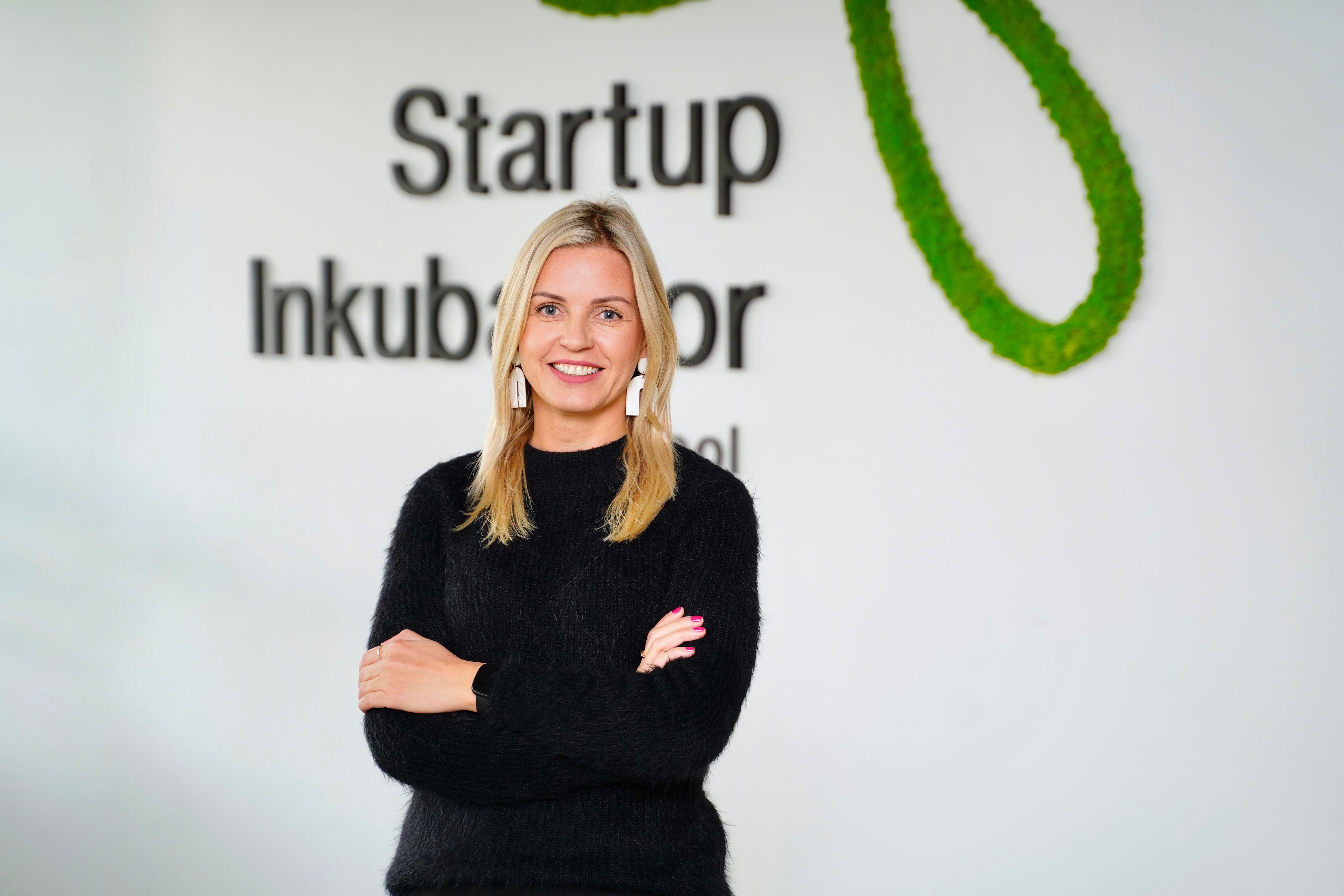
Anne-Liisa Elbrecht is Head of Tehnopol Startup Incubator and Head of NATO DIANA Estonian Accelerator. She works at the intersection of entrepreneurship, innovation, and startup development, supporting emerging companies as they grow from early-stage ideas into scalable businesses.