
Dinosaurs or digital pioneers? The race to reskill Europe’s over-40 workforce
Estonia's AI Leap Foundation becoming an influencer in Europe

‘We need to expose everyone to AI’ was the resounding message at the Future of Work in the Age of AI forum in Riga this week.
After a full day of talks, keynotes and case studies it would appear that Estonia is on the right track with its programme to introduce AI to school age students via AI Leap Foundation, preparing them for future skills. The emphasis of this move was not on the actual use of AI, but the critical thinking skills needed to use AI safely, effectively and ethically.
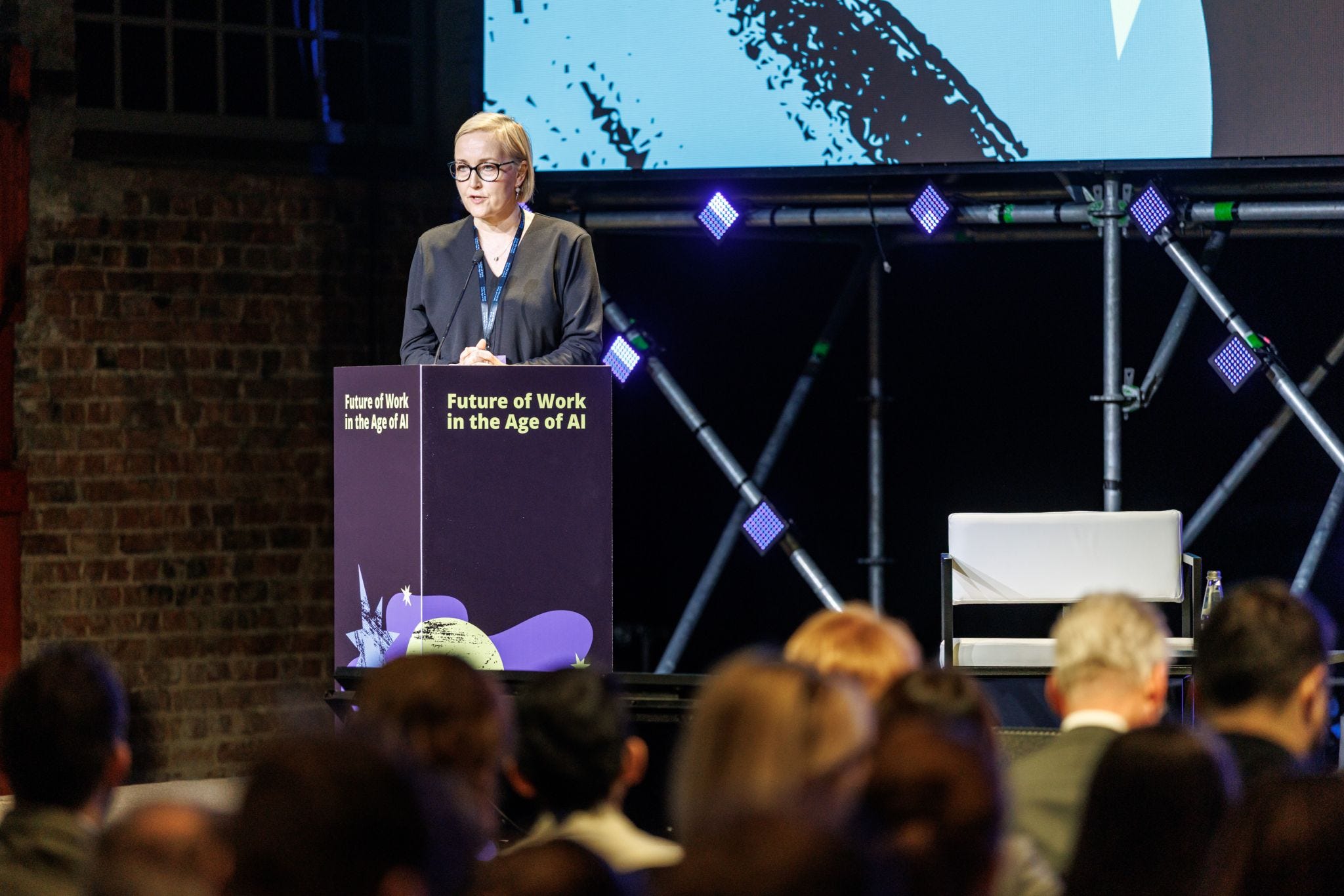
Minister of Education and Research of the Republic of Estonia, Dr. Kristina Kallas, opened her presentation and panel session with, “as we say in Estonia, the best economic policy is your education policy. So choose your Ministers of Education very wisely, because these are the people who will be defining how your economy will be doing in 10 years’ time.”
She continued to hold her own as the discussion turned to the importance of balancing regulation and innovation, with Estonia’s fast-track approach contrasting with Europe’s more cautious stance.
The Chair of Ireland’s Parliamentary Committee on Artificial Intelligence, Malcolm Byrne, who was on the same panel, told me that representatives of the AI Leap Foundation were due to travel to Ireland soon. Is it too soon to call Estonia an AI adoption influencer??!
One presentation that stood out on the day was How Singapore Built a Skills-First Nation from Soon-Joo Gog, Fellow at Centre for Skills-First Practices, Singapore University of Social Sciences - Institute for Adult Learning. The talk told us that Singapore took a ‘no one gets left behind’ attitude to its unwavering commitment to a competitive and inclusive economy.
We were told that since 2017, universities, polytechnics, and ITEs have had a formal mandate to support workers across roughly 40 years of working life, not just fresh school leavers. It supports its workforce during the AI transition with a dashboard that breaks jobs into tasks and estimates how likely AI is to take over each task. This helps companies identify where AI will impact roles, redesign jobs, and processes rather than just cutting roles. For employers, this means there is a national, tech-enabled backbone to support evidence-based workforce planning, job redesign, and AI adoption.
Discussing AI and innovation on later panels, the ‘bottlenecks’ in Europe were flagged, namely, Europe must secure its place in the AI supply chain and align regulation, investment, and education so that AI supports both competitiveness and social inclusion.
Highlighting that capital constraints and over‑regulation, particularly around data access, and persistent skills gaps, risk deepening inequality. Are we using AI's value in the wrong areas? We should reinvest AI-driven productivity gains to address climate change, biodiversity loss, and broader social challenges.
We don’t need to age out of the workforce just because we are using more AI, even though we were told that if we’re in the over-40s category, we are in trouble. Around 50% of the room nearly choked on their intake of breath, but luckily, we all survived, and with some smart people in charge of using AI to reskill us dinosaurs, we might have a future after all!
Naturally, there was a defence panel. To be honest, I thought we’d learn more but the main takeaways were that defence spending is now reshaping the whole labour market, not just “classic” defence jobs. It’s driving demand across engineering, advanced manufacturing, digital, and AI skills, but also across support roles like drivers, nurses, and cooks. For employers, that means defence is increasingly relevant whether you’re in tech, industry, logistics, services, or healthcare – and it’s worth aligning your talent strategy, training, and pipelines to this demand.
At the same time, the real differentiator isn’t just technology, it’s people and mindset. Employers who prepare their workforce for human–AI teamwork, continuous learning, and mission-focused cultures will be better placed to compete for talent against big tech and to work with defence customers. Helping people transition between civilian and defence-related roles – including veterans moving into civilian jobs – will be a key part of building resilient, future-ready teams.
Admittedly after a whole day of talking about how AI is the future and we need to learn to work alongside it, it has made me, the person who never uses AI as an ‘opt in’ (yes, no need to yell ‘AI is in everything’ at me, but I make a conscious choice not to use it for my writing) decide for this piece to use some AI. I won’t lie, I hate it, so I’m off to scrub myself clean and revert back to being my authentic self!
If you want to catch the informative sessions of the Future of Work in the Age of AI forum you can watch back here. You’ll find the agenda here.
This story was written by a human.