
Estonia to funnel €12.6 million into new early stage deeptech programme
Government support will nudge research into commercial operations

TARTU - Speaking at Startup Day’s Thinking In Billions event, the Minister of Economic Affairs and Industry, Erkki Keldo, announced a €12.6 million programme to develop deeptech research into viable companies.
With the aim of establishing 37 internationally competitive, research-intensive enterprises, the programme will involve Estonia’s science parks and universities, including Sparkup Tartu Science Park, Tehnopol, the University of Tartu, TalTech, and the Estonian University of Life Sciences. They will provide incubators, accelerators, and mentoring.
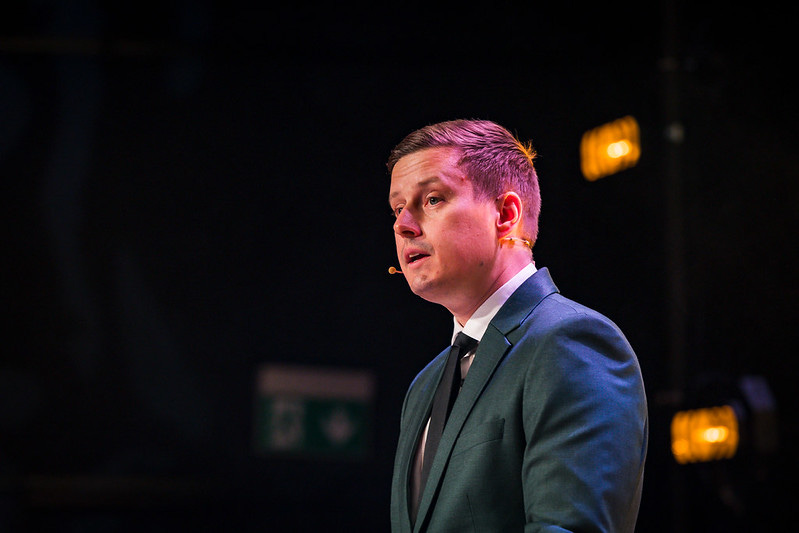
While discussing deeptech as the next wave of innovation, Keldo said, “We must support the bridge between ideas born in laboratories and everyday life – precisely what the DeepTech Start-up Network does.”
“The network allows scientific ideas to be developed into functioning businesses. In the future, these could grow with both investor funding and support from the state’s applied research programmes, and, if necessary, test their products at applied research centres to reach industrial production,” he said.
Citing that the growth of such companies would create jobs and attract foreign investment to the country, the network is expected to help companies raise around €38 million in capital, of which €29 million is private investment.
DeepTech Start-up Network four-year plan in figures:
Map 350 potential deep tech ideas.
Organise pre-incubation for 200 teams, of which 57 will proceed to the accelerator.
Provide over 10,000 hours of mentoring support for start-ups.
Launch 37 new operational deep tech companies.
“The entire ecosystem needs a push,” said Agnes Roos, head of Tehnopol. “The DeepTech Start-up Network addresses these bottlenecks.
Estonia has 1,620 companies operating in the start-up sector (according to Startup Estonia) and 216 deep tech start-ups.
To put €12.6 million investment into context: In 2025, deep tech companies attracted nearly €161 million in investment, accounting for just over 52% of the total €310 million invested across the entire startup sector.