
FOMO.01: Kotkas, Laas, and the new FOMO
Good morning, and welcome to the very first edition of FOMO.

We’re starting this because we felt something was missing in the conversation. For years, the story of our startup ecosystem has been told by two kinds of people: PR professionals looking to polish a “glitzy” narrative, and those we might call the “media sharks”—people whose primary interest is hunting for scandals and drama just to secure the next click.
When you view the “new economy” through those lenses, you lose the reality of the work being done. We think you deserve the view from the inside.
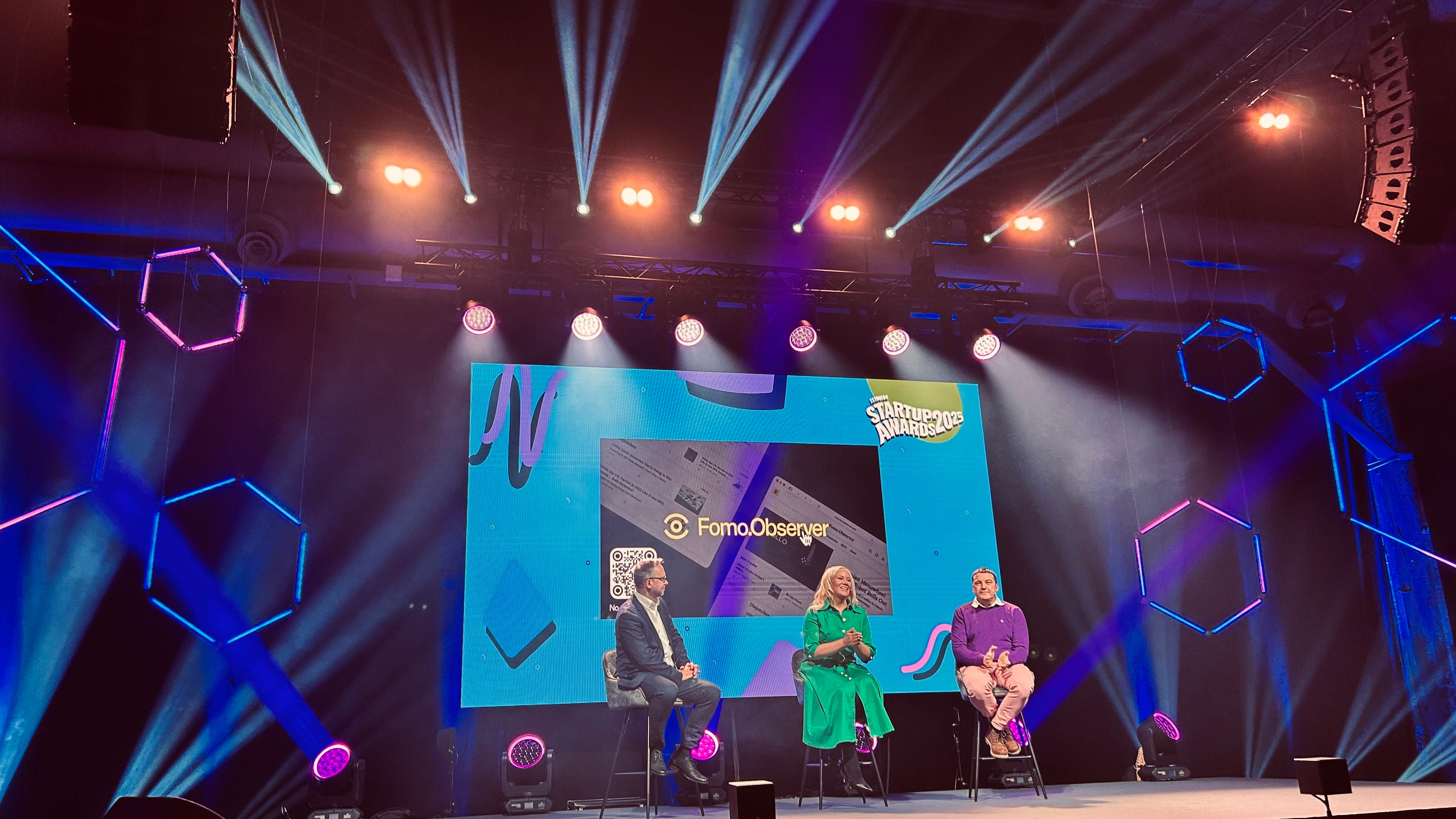
We are building FOMO to be the “fourth pillar” of our community. We aren’t here to sell you hype, and we certainly aren’t here to bait you with scandals.
Our mission is to provide the “unadorned truth” about startup life—the hard-won lessons, the actual data, and the real stories from the people in the trenches. We are professional journalists and entrepreneurs who believe that transparency and fact-based discussion are the best ways to help this ecosystem grow.
In this debut issue, we’re cutting straight to the core of what it takes to build.
In today’s FOMO:
The Lead: A deep dive with Kaarel Kotkas, exploring the reality of scaling a global business.
The Columns from Liina Laas and Kaidi Ruusalepp. We are launching with a heavy-hitting group of contributors who know exactly what it’s like to sit in the founder’s or investor’s chair.
Our goal is to bring you four to five of these stories a week — content that matters to you because it was built by us, for our people.
We’re keeping it free, expert, and real.
It’s great to have you with us from Day One. Let’s get to work.
— Triin, Tarmo, Fiona, Teele, and Mario
But first, a quick look back to Thursday evening when we got to know the winners of the Estonian Startup Awards 2025:

🐝 Newcomer of 2025 - Gridraven
🐝 HealthTech of 2025 - Muun Health
🐝 Giving Back Powerhouse - DefenceTech Meetup
🐝 FinTech of 2025 - Veriff
🐝 SaaS of 2025 - Pactum AI
🐝 DeepTech of 2025 - Skeleton Technologies
🐝 Investor of the Year 2025- Sten Tamkivi, Plural / Skaala
🐝 Impact Visionary of 2025 - ALPA Kids 🦙
🐝 DefenceTech of 2025 - KrattWorks
🐝 Revenue Hack of 2025 - Veriff — they said they doubled revenue in 2025!
🐝 Founder of the Year 2025 - Kaarel Kotkas, Veriff
And, of course, the Estonian Founders’ Association unveiled Fomo.Observer founder Triin Hertmann as their new President, succeeding Allan Martinson.
This week, Triin also spoke about her plans and about FOMO.Observer in a thorough interview with Tech.eu.
The Island Farm Boy Who Aims To Become the World’s Digital Sheriff
Founder of the Year, Kaarel Kotkas, built Veriff on a simple island mantra. From feeding cows on the island of Hiiumaa in winter to securing global transactions for the likes of Uber.
By Fiona Alston
Kaarel Kotkas is barely making a dent in his third decade, yet the islander from Hiiumaa has been making a dent in online verification for over 10 years now and sits in the coveted category of unicorn founder.
He’s also in the controversial category of being a Forbes 30 under 30, but given that his platform is solely built on trust, it’s unlikely that we are going to see a Netflix documentary about a fall from grace! Surely not as they prepare to go public.
Veriff’s AI-native technology uses automation and human expertise to accurately verify users worldwide. It counts Bolt, Bumble, Deel, Instacart, Monzo, Starship, Trustpilot, Uber, and Western Union among its clients.

“For us, it’s all about building the trust infrastructure and becoming the source of truth for trusted identities online,” he says as he explains that verification is not just for onboarding but “it’s now becoming essential for every single transaction online.”
“AI has, for sure, accelerated identity adoption - like COVID did. And identity adoption, which can go across the board, is required to be very accurate, global, and seamless in terms of real-time experience. This means it needs to be so much more than just a compliant check mark, because in Estonia, we even bet our democracy on the accuracy of it,” he says.
“Warren Buffett said you never know who is swimming naked until the tide goes out, and there was quite a lot of skinny dipping in this market,” he adds.
Keen to learn more about the founder behind one of Estonia’s most successful companies and the verification process for many of the apps I use, I sat down with Kotkas to find out more about the man behind the mission.
Opening up these conversations can be a little awkward, but the fact that he has to adjust the blinds as the sun is blinding him on a winter’s day in Estonia gives us the perfect amusing anecdote to hit our stride. Who couldn’t be in great form when the sun is shining in January?
I quickly get schooled on the “best” island of Estonia, Hiiumaa, his birthplace. Growing up on a farm with 60 cows, one horse, and over 30 sheep with water sports as a pastime, he first moved to the mainland as a teenager with the wind in his sails, literally. He moved to Tallinn to train as a budding windsurfer until a broken ankle knocked him out of contention.
With hopes of making it big in the world of windsurfing dashed, Kotkas had more room to work on other projects. It’s surprising how much time you get back before and after school when the training regime stops.
The main goal was to become a doctor, studying at Tallinn Reaalkool, but the itch to do something and make ends meet led him to start a company. On that sold power banks at the music festival across the Baltics, as smartphones were becoming more popular at the time, he was taking advantage of the situation… and the poor battery life of yesteryear!
The doctor thing went out the window when he started building websites and getting more curious about online security, or rather, people’s lack of it. Thinking he’d caught his first big break building websites, he moved out of his father’s house, establishing some kind of independence, but he admits it was short-lived. Things fell through with the business, and he ended up sleeping on his sister’s couch.
Wise was known as Transferwise in those days, and Kotkas, spotting an opportunity to improve its security, decided to shoot his shot and sent them an email. That email ended up being the catalyst for Veriff, but back then, it led him to go in-house to help the firm improve its verification system by leveraging his hacker skills.
“That’s the first time I thought, ok, let me do the tricks that I did as a kid living on an island where I was the youngest, and essentially the designated IT guy at home,” he says.
Still being able to use the same tricks in 2015 seemed unfathomable to Kotkas, and so the seed for Veriff was planted, not inside Transferwise; that relationship parted ways, but it grew into something much better. Wise co-founder Taavet Hinrikus invested in Veriff and served on the board. And Wise is, of course, a customer.
The vast power of technology, like the iPhone 6, which was billed as millions of times more powerful than the hardware that powered the Apollo 11 moon landing, was fuel for Kotkas to build a robust verification system to stop people like him from beating the system.
“Instead of pictures, let’s use video from the beginning to the end. Let’s use device and network fingerprinting, and essentially, instead of three pictures, let’s have our 1000 data points between which we can automate and objectively deliver decisions at scale,” his thoughts on what was going to make Veriff stand out.
Where did the name Veriff come from? To be honest, I don’t know why I didn’t figure this out sooner; it’s an amalgamation of verification and sheriff.
“The sheriff is the one who kept villages safe and got people to abide by the laws, then in order to trust, you have to verify - I thought Veriff is going to be the one that becomes the guardian of behaviour online,” he explains to me.
Entrepreneurship wasn’t really a word that Kotkas had associated with, despite his constant graft of setting up side hustles since he left the island. “It was just the only way of getting going and fixing stuff,” he says. But it was far before he crossed over the borough boundaries of Tallinn that the act of getting stuff done was ingrained.
It’s at this point in our chat that I get an Estonian lesson. A term I hope I never adopt, Kotkas teaches me the phrase ‘Ei viitsi,’ meaning ‘I don’t feel like doing it’ or ‘I can’t be bothered.’ This was a concept he hadn’t come across until moving to the city. Growing up on a farm, there was no such luxury.
“It was new for me, as I couldn’t say ‘I don’t feel like’ in the winter, going to give hay to the cows before school, they had no other way of getting it. It was just so basic,” he tells me. Clearly, he has not adopted the phrase either.
We discuss what it means to be a founder and what entrepreneurship is like. “You have to make a conviction - then all the rest of the steps are just picking the right tools for the task at hand, and you do what it takes,” he tells me. “You’ve got to be humble, and ask around, and make fun of yourself as well, along the way.”
I asked him when he had the moment that he realised that he had ‘made it’. To my surprise, he tells me he hasn’t had it yet.
“I’d really like that, but there is also another part, if I do have this day - it also means that I’ve given Veriff everything that I have to give - and I have somebody that can take it over when I’ve reached the point, but I still haven’t,” he says.
While we celebrate Veriff’s success, it’s worth examining the tough parts, too. The dark moment where the hard choices had to be made - the layoffs. In both 2020 and 2023, Veriff cut its headcount. I ask Kotkas how he felt to be in that position.
Speaking about the layoffs during COVID, he says, “It was a tough time.” The company hired 200 in six months due to increased activity with crypto firms, but when a funding round was pulled, the rug was pulled from under Veriff.
“You need to make a call based on the information you have, but always taking as much care as is in your power, of the people - making the decision is always so much harder than the execution of it. It was a hard call, but it was required,” he says.
“You always do everything with humility and integrity, but at the same time, you’ve got to put the company first, as in the long term this is best for everybody involved,” he adds.

As we begin to wrap up our chat, I ask him what’s the dream…
“As much as tech has enabled us to access the whole world without leaving our seat, and tech has been driving the acceleration of globalisation and this sense of living without borders, but the moment we go to, let’s say, Australia, we can’t take our trustworthiness, our credit score, or anything with us,” he says.
“We are still very fortunate with our passports in terms of our ability to travel, but It’s still very tactical and political that some people can’t despite them being amazing human beings - I’d like to build up the pattern of trust that meets people’s true identity, which is defined based on their interactions and the pattern of credibility, not that something is granted by the luck where you are born from,” he explains.
“So my goal is that in the future, real identity, like a passport, will be chipped by Veriff, not only by the governments, to enable people equal access to services driven by their real identity,” he adds.
We close our chat with the news he’s heading off to the States until he can get back out on the water here. Given that the blinding sun we experienced was a rare day for us in January, I understand his choices.
LIINA LAAS: Announce You’re Going to Win
Expecting to Win Feels Awkward. That’s Why It Works.
Every festive season, the board games come out. And every festive season, I follow the same tradition.
Before the game starts, I tell everyone that I’m going to win.
This usually results in laughter, some eye-rolling, and the occasional person immediately taking the game far more seriously than they planned to.
Then, more often than not, I win. Definitely at Monopoly. Definitely at Hitster.
For a long time, I thought this was just confidence, or experience, or perhaps the unfair advantage of having grown up in a house where music was always playing. But over time, I realised something else was at work.
Publicly announcing victory has consequences. Mainly, that you now have to earn it.
The moment you say out loud that you expect to win, you remove the option of playing casually. You pay more attention. You prepare more. You take fewer unnecessary risks, and you stop drifting. Losing is no longer just losing. It’s mildly embarrassing. And embarrassment, it turns out, is a surprisingly effective motivator.
I’ve spent most of my career in sales, and this dynamic shows up there constantly.
In sales teams, I often hear people talk about being “realistic” or “managing expectations.” While there’s nothing wrong with realism, it’s frequently used as a polite disguise for low conviction. Reps walk into meetings already assuming they won’t close. Founders pitch investors while apologising for their ambition. Teams soften their language so that failure feels less sharp.
I’ve always told my sales teams something that sounds unrealistic on paper: expect to win every deal.
Yes, I’m fully aware that this is statistically impossible. But the point isn’t the statistic. The point is behaviour.
When you expect to win, you prepare differently. You ask better questions. You push a bit harder when things get uncomfortable. You follow up instead of quietly writing a deal off as “not a fit.” You don’t negotiate against yourself before the other side has even spoken.
When you don’t expect to win, all of that effort quietly disappears.
Sales is not just about skill. It’s about belief backed by preparation. Confidence on its own doesn’t close deals. If it did, LinkedIn would be one big quota crusher. But skill without confidence often never gets a chance to show up. It stays hidden behind hedging language and safe decisions.
This becomes very obvious in complex sales, especially enterprise deals. Frameworks like MEDDICC exist for a reason. They help you understand whether a deal is real or imaginary. But no framework closes a deal if the person running it doesn’t believe they can win. If you don’t think you deserve the deal, you’ll find a way to disqualify yourself long before the buyer does.
Monopoly, oddly enough, is a good illustration of this. The game is not particularly clever. It rewards decisiveness and patience, not brilliance. Buy early. Buy anything you land on. Build houses quickly. Four houses, then a hotel. Someone will go bankrupt faster than expected.
Most people don’t lose Monopoly because they don’t understand the rules. They lose because they hesitate. They wait for the perfect property. They avoid committing cash. They play defensively in a game that rewards offence.
I see the same pattern in sales organisations. Teams wait for the perfect messaging, the perfect pricing, the perfect timing. Meanwhile, someone else commits earlier, compounds faster, and quietly takes the account.
Confidence also has a strong psychological component, which becomes very clear in games like Hitster. People give themselves away constantly. They smile too early. They can’t sit still when they know the answer. Humans are terrible at hiding belief.
Buyers, investors, and prospects pick up on this just as easily. They read tone, pacing, and conviction long before they read your deck.
There’s also an accountability element that’s often overlooked. When you say out loud that you expect to win, you create a form of public commitment. Sharing goals works not because it motivates you, but because it makes failure uncomfortable. Motivation comes and goes. Accountability sticks.
In sales, accountability is everything. When a rep commits to closing a deal by a certain date, they behave differently than when they say they’re “hoping” it closes. When a founder publicly commits to a milestone, priorities suddenly become clearer.
None of this guarantees success. You can do everything right and still lose. But expecting to win increases the probability that you do the work required to deserve it.
That’s the part people often miss. Expecting to win isn’t arrogance. It’s a decision to play seriously.
So whether you’re sitting down to a board game, walking into a sales call, or pitching something that doesn’t exist yet, my advice is the same.
Announce that you’re going to win.
Then do the work required to make that statement true.
It’s uncomfortable.
It raises the bar.
And that’s exactly why it works.

KÄRT SIILATS: Conversation With the Next Wave
The New Year and the launch of a new media platform seem to call for an optimistic start. So I thought about what makes me feel the most optimistic, and it’s seeing young people build something meaningful. One of those is Tiffany Tuisk, a venture capitalist at Wave Ventures, which invests in Gen Z founders.
I’m cheating a little by having a conversation with Tiffany not telling my own stories, but I believe that it is the job of a good VC to highlight founders (which I will also be doing here) and co-investors and not only do I have a portfolio company in common with Wave Ventures in Andon Labs, but Tiffany also used to intern for me one summer when she was 17. And as I see her making waves right now, I believe she might end up as one of my biggest accomplishments yet, so this is also my story of putting a little bit of effort into an internship program.
Launchpads For Young People
That internship felt like a failure to me because I didn’t spend enough time with them. But I did one thing right: I hired two of them, and they entertained and taught each other while soaking up the atmosphere. And as the other half of that intern pair was Anna Linder, who is currently building a startup at Harvard, something must have gone right.
Another thing Tiffany did to propel herself forward was to participate in the ‘Work Shadow’ program – she asked around who the most interesting person in Estonia for VC was, got introduced to Sten Tamkivi, who was building Plural, and learned a lot in a single day.
It turned out the internship was also a launchpad to Wave, as Celine, whom I also helped hire, made the introduction when she heard Wave was looking for someone in Estonia. “Launchpad” is the word Tiffany uses at least ten times during our conversation, perhaps because she’s also studying engineering at TalTech at the same time and writing a thesis on the craters on the moon.
Receiving the offer from Wave before university meant she had to stay in Estonia, although she already had acceptances from America…
Continue reading:
Before you go, check out the following stories. Until next week!