
FOMO.07: The 365-Day Network: Moving from Campaigns to Consistent Support
March 8 is a reminder, but at FOMO, we look at how opening doors — and keeping them open — is a year-round job for founders and investors.

At this week’s editorial meeting for FOMO, where we discuss the topics we want to cover and the plan for the week, we spoke about doing something for International Women’s Day (IWD) and how we could do it in a way that would support the ecosystem and also that people would want to read.
I was quick to say I didn’t think it should be the newsletter; I guess I didn’t want to ‘put people off’ reading it. (Cue Taylor Swift singing “I’m the problem, it’s me”) By people, I probably meant men - we are still so new and trying to grow. The thought that came to my mind has haunted me since… hence you are reading this in the newsletter.
The theme of IWD this year is ‘Give to Gain’, a campaign aimed at fostering a mindset of generosity and collaboration. We decided at FOMO we’d do our own twist on this and highlight times when women were given opportunities because someone said their name in the right room, supported them through a difficult time, or believed in their talent and helped nourish it.
But despite writing numerous articles for IWD over the years and for a women-in-business vertical in Ireland, I’ve also had a slight difficulty with the subject. What does it really mean to provide an opportunity, or to support a woman in her career?
Before journalism, my background was in horse racing; I was a work rider - simply put, I rode thoroughbred racehorses all day, every day. I’d like to think that things have changed for the better, but at the time, it was a brutal place to be a woman and even worse for a woman who was really good at her job - this made me horribly unpopular with the lads in the yard. I was often the only woman in the yard, or one of the few.
In particular, in one of my jobs, I was harassed and ridiculed by the lads from the minute I walked into the yard until I left. I was told they’d find where I lived and burn down my house, I was cornered in stables, my car was tampered with, and my reputation was dragged through the mud. But I still turned up every day and did my job, which my boss, a man who was giving a female work rider an opportunity, was happy with. But anytime I mentioned the issues, I was told to just get on with it and not make it worse. (Of course, I’m relaying the mild version of events here.)
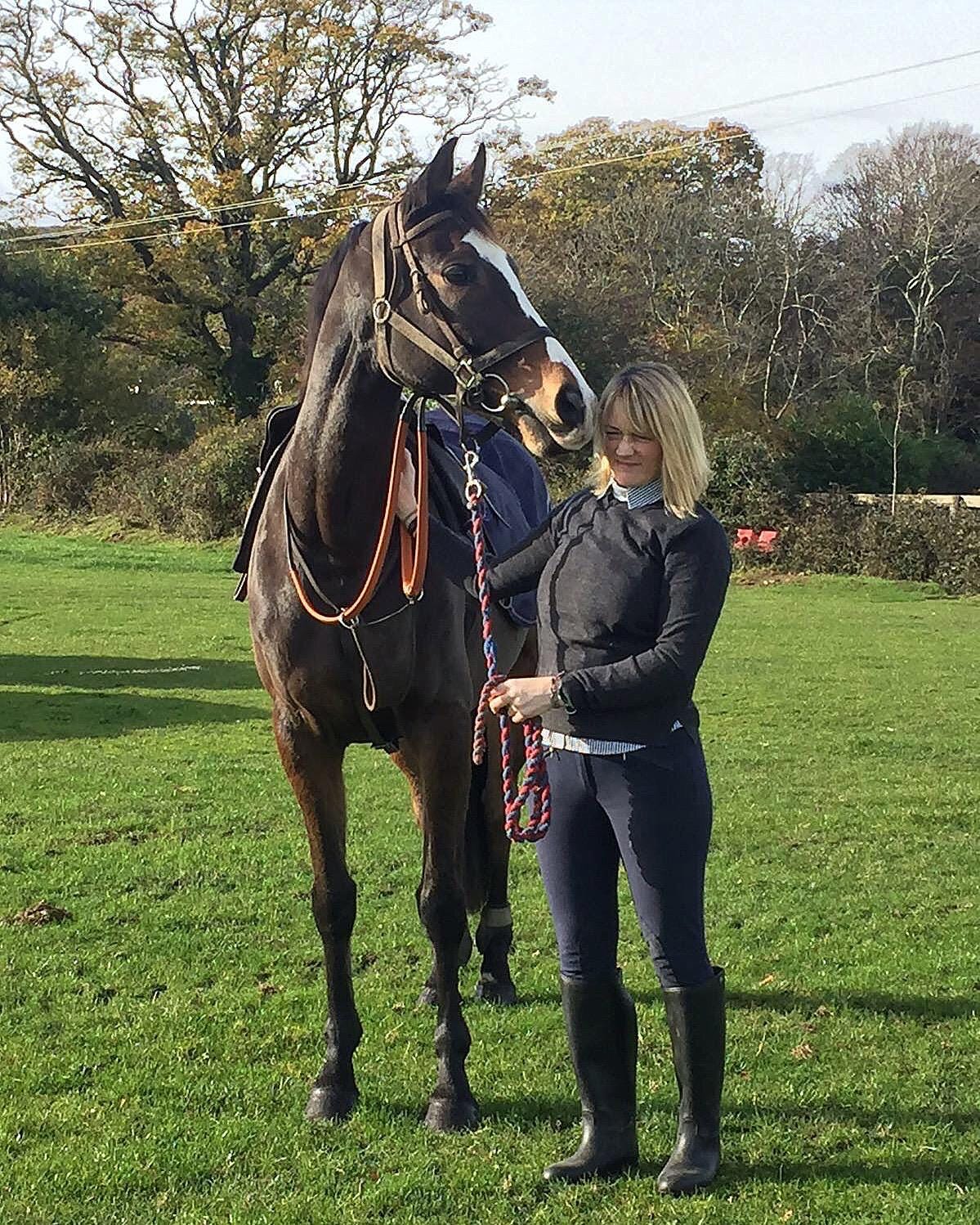
Last year, that old boss of mine died. We hadn’t spoken in years. When he died, I read in an article that one of his friends said, “One thing about him was, he was really good to his staff.” I sat with that for a minute. Yes, my career as a work rider was partly made possible by him. I learned so much from him, and his name on my CV opened doors for me (it was a top yard at that time), and let’s face it, I was given opportunities good enough to irritate another man into wanting to burn my house down!! But here is the other side of that thought: that boss never once had my back when I really needed it.
What I’ve learned now, I’m out of that industry, is that he had all the tools and the power to stop that; he was the boss, yet he chose not to. I don’t feel sorry for myself for enduring that time, as we say in Ireland, ‘it was the makings of me’. Would I be fighting so hard to stick up for the startup ecosystem and supporting founders, and yes, particularly women, and being as outspoken as I am, if I hadn’t the war wounds of just fighting to exist in an industry I truly loved?
People will often say to me, referring to my time in that job, “he was good to you.” I often agree, but now I bite back with, “But he could have been better.” I think if we are truly lifting people up and providing them with opportunities, particularly women (in this case), we should support them in all aspects so they can really shine. It’s not a part-time gig - it’s all in, full send.
A supporting role
With that in mind, we landed on the question we wanted to ask some of the women in our ecosystem on March 8: Who is someone who has selflessly opened doors for you and had a big positive impact on your life? As you can see by the responses below, we have some pretty amazing people in our ecosystem willing to support others.
Kristel Kruustük, founder of Testlio: Summer Weisberg is someone who truly lifted me up. There were moments when her trust in me mattered more than she probably realised. That kind of leadership changed how I see myself and reminded me that I am valuable and worthy.
Kelly Lilles, co-founder and CEO of ALPA Kids: Andres Kivistik was the very first investor who believed in ALPA Kids at a time when we had almost nothing to show. His belief came long before it was obvious that this could become a real company. Kati Vabi, because when we closed our seed round in Q4 2025, she didn’t just join as an investor — she stepped in as a true partner and organised a syndicate alongside Skaala and ESIIF. Maarja Männik, I hired her four years ago when ALPA had very little to offer, but she believed we could build a global company together - she made that belief a reality.
Kadri Tuisk, founder and CEO of Wundamental AI: At an advertising agency, a top management board member, Karin Sepp, looked at my work and said something like, “This girl has potential and is going to achieve great things.” At the time, feedback culture barely existed. It is easy to support people once they already have titles, traction, and proof, but the real act of lifting someone up is recognising potential before the world sees it.
Triin Hertmann, founder and angel investor: Lifting each other up sometimes means to me just including them. I felt so warm and could not believe my luck when Kaidi Ruusalepp invited me to dinner with her and some other amazing female founders. This gesture really changed the course of my life, gave me many new friends, and opened doors to so many new adventures, experiences, and investments.
Kärt Siilats, co-founder and General Partner, Mojo Capital: The longest impact tends to be the strongest. My first track coach, Anne Rei, changed the course of my life for the better. I had never focused on anything in my life before that. David Dana at EIF - he included me on the investment team for Seedcamp, then through that I met Reshma Sohoni, who not only became my role model for years, but also later selflessly allowed me to invest in her oversubscribed funds. Thanks to that investment, I also got to meet Matthias Ummenhofer, who later invited me to co-found mojo.capital with him, fulfilling my lifelong dream of entrepreneurship, for which I will always be grateful.
Mari-Liis Soe, co-founder and CEO Complok: one person who has truly lifted us up during our startup journey is Triin Kask. She has been incredibly supportive throughout the entire story, often quietly, but always with genuine care and encouragement. The people who change things the most are often the ones who simply believe in you and open a door at exactly the right moment, and she has done that for us more than once. I’m deeply grateful for her support.
Teele Kaljuvee, Fomo.Observer Estonian Editor: A few months ago, I thought everything I had built had collapsed. I walked away from a dream job - with a strange mix of relief and fear - mostly fear. At my lowest point, I got a message from Kristel Kruustük - she knew I had my own vision for journalism and wanted to connect me to Triin Hertmann. A small gesture, but it was exactly the right moment; it meant everything - a single email grew into something much bigger. The rest, as they say, is FOMO history.
Kaari Kink, Programme Delivery at NATO DIANA: I came in with a commercial background from venture, but defence was new territory for me, joining NATO DIANA. Entering a new sector isn’t unfamiliar for me - I know that I’ll figure it out, but it still requires someone to give me the space to prove what I can do. My manager, Kadri Tammai, did that in a very natural way. She’s shown me a style of leadership that I’ve come to value: staying calm and focused even in demanding situations, communicating clearly and directly, and pairing a clear vision with a practical sense of how to move towards it.
Danielle Coimbra, PR Manager at Wallester: Lya, my friend and former colleague from when I was a young journalist working for a health and wellbeing magazine in Brasília, my hometown in Brazil. From the very beginning, she saw potential in me that, at the time, I wasn’t even sure I saw in myself. Whenever we speak or have the chance to see each other in Brazil, she still reminds me how proud she is of the path I chose and the courage it took to build a life abroad.
The support finally arrived
Obviously, my move from being a work rider to a journalist was not exactly a smooth one; there is no sweet segway from sitting on a horse’s back to reporting on the tech industry, but I have been very lucky to have had people say my name in the right room.
During COVID, the Irish national broadcaster RTÉ was looking to create a new vertical to share news and information to the SME and startups ecosystem, and they needed a journalist/curator to run it. Paul Hayes and his Beachhut PR team said my name in the right room, and I got the gig, and it transformed my career…and I suppose you could say it was a catalyst to my passion for Fomo.Observer.
Another man who has continuously backed me is Tarmo Virki. I met him on a press trip in Vilnius, and from the minute I met the man he has done nothing but provide me with career opportunities, whether its throwing me in the deep end doing a day of live back to back podcasts for NatureBacked, introducing me to my editors in Resilience Media or telling me that he’s starting a new media (FOMO) and assuming I was joining, as I really don’t recall him asking me to do this!
I’m glad I reversed my decision to make this the topic of this week’s newsletter, and a little ashamed that I defaulted to ‘what a man might think’ about reading this. All that’s left for me to do is to wish you all a happy International Women’s Day!
Elsewhere, we ran 2 thought-provoking pieces on AI this week, check them out:
MARKO KLOPETS: The Forbidden Apple Mac Mini

In November 2025, a buff and rich Austrian dude released a piece of software nobody cared about. Clawdbot, it was called. Three months later, Sam Altman proclaimed him a genius, and OpenAI acquired his one-man show for the GDP of a small nation.
PS VATTAN: Who Is Responsible When the Agent Gets It Wrong?

In 2025, Klarna’s AI agent handled two-thirds of all customer inquiries — 1.3 million conversations a month across 35 languages. Then complaints rose, quality fell, and the CEO admitted they’d “gone too far.” Klarna started rehiring humans.
In the news, also:


