
Frankenburg adds €30 million to its arsenal
Missile defence startup raised funding for its manufacturing plants.

Frankenburg Technologies, the Estonia-headquartered missile defence startup, has officially announced a €30 million raise, which will see it build its missile manufacturing capacity in Europe. The Series A funding was led by Plural and followed by Estonia’s SmartCap.
It’s not lost on us that the announcement was scheduled to go live as Estonia celebrates its 108th anniversary of independence, and Ukraine marks four years of Russia’s ongoing full-scale invasion.
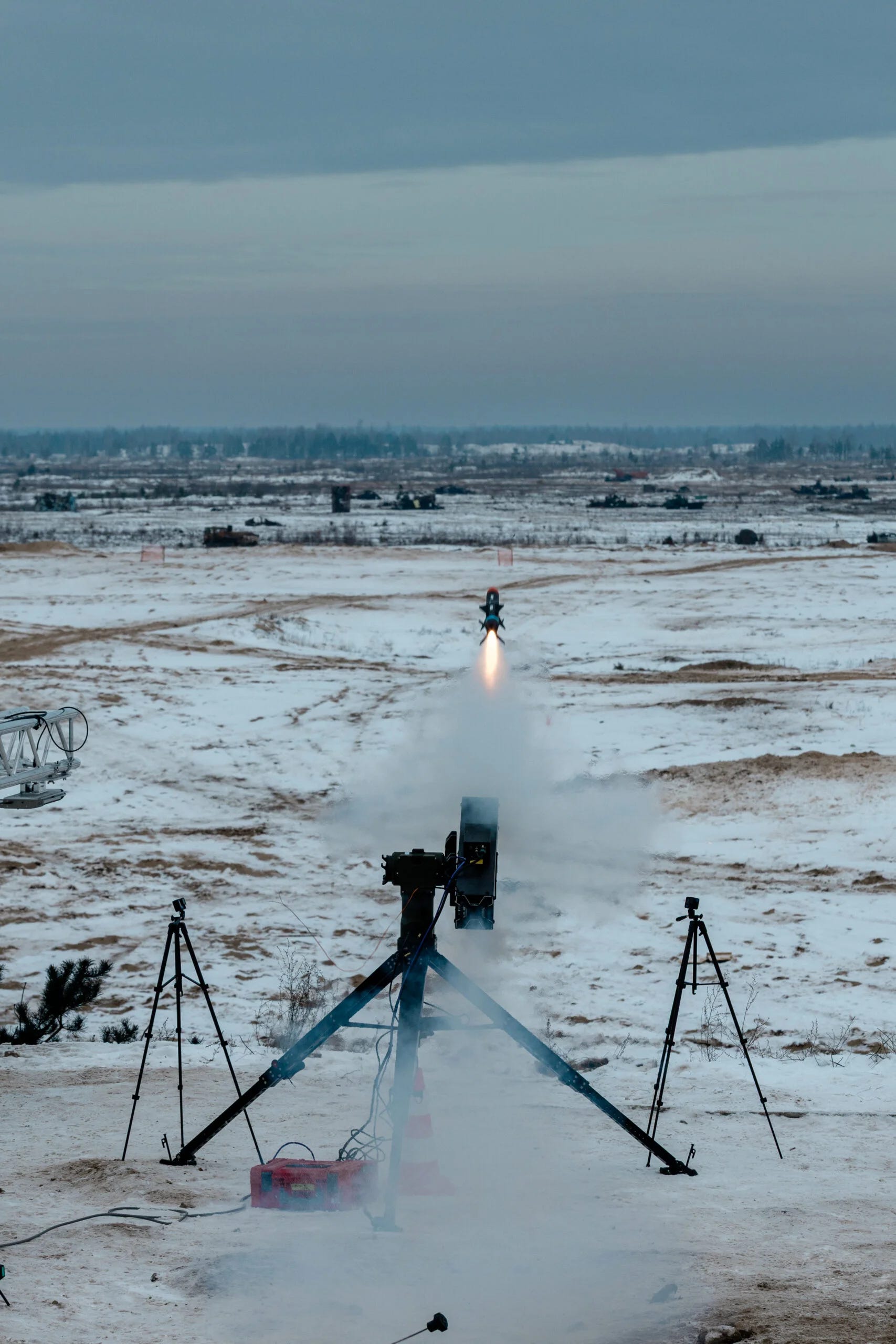
Frankenburg was founded in 2024 by deeptech entrepreneurs Taavi Madiberk (Chairman) and Marko Virkebau (Board Member). At the helm is former Permanent Secretary of Estonia’s Ministry of Defence, Kusti Salm, with whom we grabbed a quick word to find out more about Frankenburg’s vision, the status of its Mark 1, and ask the all-important question … is Frankenburg an Estonian company?
“We’re a European company by design, this is how we see defence maturing in Europe, this is how we need to set it up,” he tells Fomo.Observer, saying that they intend to stay close to their customers. “This needs to be designed into the way we operate.”
“This is also way better for accessing talent, and well, we sincerely believe that the time for national champions is over, and if we want to truly build a European powerhouse, then it needs to be European,” he says. “This is how we plan to grow - not the easiest path to take, but I think this will be the road to success.”
The company is headquartered in Estonia, has a large R&D team in the UK, manufacturing in R&D in Latvia, and offices in Poland, Lithuania, Germany, and Ukraine - some might say they have all bases covered!
“We’re Estonians. We feel this is the place to develop part of this business, and we are just lucky that SmartCap supports our mission. There is no forced marriage with Estonia through that, I think it’s a very entrepreneurial spirit that SmartCap carries forward - they’re seeking commercial success - they’re encouraging us to go to export markets [and] they’re encouraging us to be successful in Estonia,” he tells me.
“I think this is the way sovereign-backed venture capital should act,” he adds.
Estonian company, it is so! Noted.
“In a world where an adversary can deploy tens of thousands of autonomous attack drones, staying safe is not rocket science: defence must be cheap, fast, and count in millions of units available. Frankenburg is tackling one of Europe’s most urgent defence challenges by building credible deterrence with missiles, at startup speed. The team combines deep defence expertise with a fundamentally different manufacturing mindset, and we believe this approach can have a lasting impact on Europe’s security and industrial resilience” - Sten Tamkivi, Partner at Plural, who appears to be taking a big leap from deep tech to funding a missile factory.
The company’s first interceptor, the Mark I short-range air-defence missile, just 13 months in the making from concept to advanced testing and industrialisation, is the product Frankenburg’s being currently judged on. Can they really build a more affordable short range missile to hit drones out the sky, that will be in the hands of frontline soldiers in record time?
“We have developed a fully guided missile and demonstrated the capability, and also recorded this so everyone can see it,” Salm says as I ask where they are with the project. “The capability is very close to being handed over to a customer - clearly to make it function as a fully independent weapon system is another step.”
“We work on rigorous development timelines with the best talent in Europe that we can access - we are making something hit something flying almost at the speed of sound, it is like hitting a bullet, with a bullet, in the air. So it’s a huge challenge making it function and be accurate in wind and different environmental conditions,” he goes on to say.
“Usually, the missile programmes take more than ten years in Europe - this is a track record; we have done it ten times faster. Is the first version absolutely perfect? Of course not. But, I mean, we’re operating on a good enough basis, and our mission is to get something to the hands of war fighters as fast as possible, so that is the plan,” he says.
Speaking about the testing, he says it has been primarily done in Latvia, where the Latvian government has been a big supporter. Where usual missile testing is done twice a year Frankenburg has given Mark 1 over 70 outings in the past year.
“Which is something that helps us to speed up the iteration of the development process, polish out all the mistakes,” he says. “We have been working very closely with Ukrainians.”
So with a further €30 million in its arsenal, which is a pretty big deal by Estonian Series A round standards, what’s next for the pan-Baltic European defence company? To build the capability to produce 100 missiles per day per site, on two planned production sites in the EU. “Expanding Frankenburg Missile hubs in the UK and Germany, supporting next-generation missile development, prototyping and cross-site integration,” states the press release.
“Making sure we get the most out of the performance, safety, everything that is required, and making sure that we get the manufacturing level to the intended 100 missiles a day - it’s going to be a huge effort - gigantic, Herculean effort,” states Salm.
I’m keen to exercise my ‘how many ex-military generals does it take to build a defence tech startup up joke’ but I decide better of it but I do, through a stupid grin, ask if there’s anyone else retiring soon into the company? I won’t lie, he takes it well (taking it badly would have been ending the call. A CEO who can handle my humour, it’s going well!)
“I think if we look at the people that we have gathered, then we look for the best people in all the areas that are important for us. When we speak about the ex-military, then we speak about the most defence readiness oriented, most mission oriented, former generals on the market that have dedicated their careers to that,” he explains. “They are the best experts - and have the best reputation.”
“We have been lucky enough to gather a very strong group of talent from the most sophisticated missile programmes in Europe in the last generation, and we definitely want to move forward with this effort,” he says.
“And this is also the message to every talented engineer in the missile sector. If you want to do something that you have been dreaming of doing, that you’ve been writing yourself for years - this will be the chance to harness your talent and introduce affordability and scale to the missile industry that never existed there, and also maintaining the high performance and the high spec, sort of the crown jewel of the industry,” he tells me.
As we wrap up our chat, I ask him, “What’s the dream?”
“The dream is the mission that we will eventually build the missiles, in counter-drone, in mid-range, in anti-ballistic missile defence - bringing 10 to 15 times cost reductions in all the categories, equipping every single military force in the free world,” he says. I leave him to it.