
KAIDI RUUSALEPP: How to Market a Hotel That Doesn’t Exist, Yet.
Lessons on how to put yourself on the map, even if the location strikes fear
In tech, we ship MVPs. In real estate and hospitality, an MVP takes years and tens of millions of investment. Yet travelers, investors, media, and future team members need to buy in long before the doors open. So what do you do when your product is literally a building that doesn’t exist? You market it anyway.
To my surprise, telling an “under construction” startup story and an “under construction” hotel story share many similarities. There’s only one difference – at one point in hospitality, you are going to own a huge physical building, and if the business plan doesn’t work out, pivoting is not an option. And that puts everything into a very different perspective. When we started preparing to build our new hotel in Estonia, we decided to start selling it right away to mitigate risks and test the waters. Why wait, right?
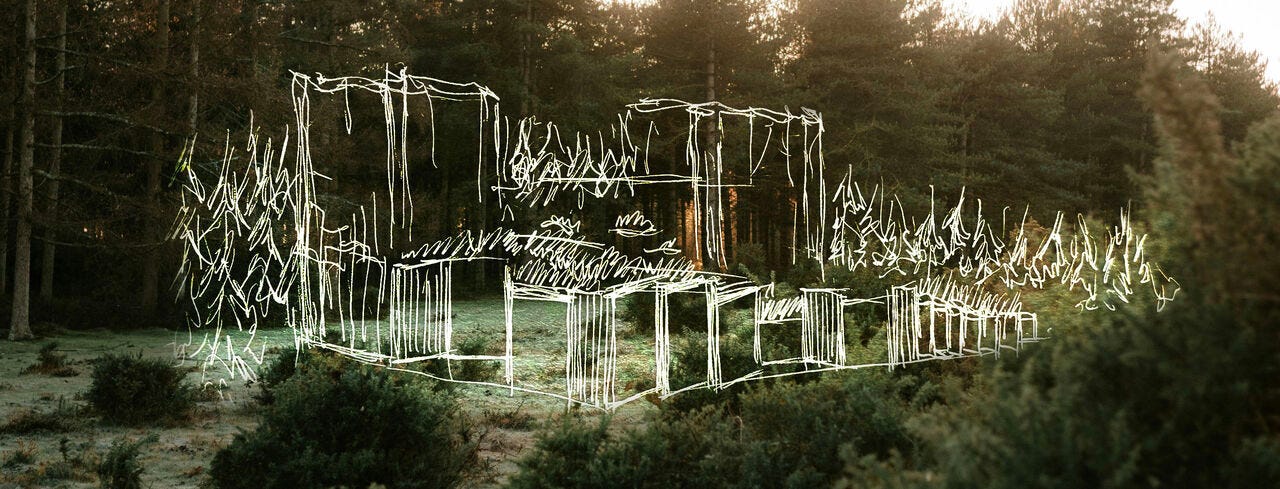
You are welcome to browse www.metsa7.com – it’s now live. But it’s live and out in the open with lessons learnt. Here they come.
Lesson one. Where on earth is Põlva?
When I tell people we are building a destination hotel in Põlva, the reaction is usually the same - a blank face. And then comes the careful question - where exactly is that? Or if they are locals - why? We understood, at one point, that this is both a branding and a map problem. A Põlva in South-East Estonia it simply does not exist in the global (or even Estonian) imagination. Not because it lacks substance, but because it has never been translated into a language the hospitality world understands. If you zoom out far enough, everything becomes “the Baltics”. Zoom in a little, and you might get Saaremaa. Zoom in again, and the mental map simply goes blank.
So the task of the website is to build a brand around South-East Estonia, or as my friends from Brussels said, North-East Europe. And task number two is to put us on the map for nature-loving travellers as a destination. Simple. 🙂
Lesson two. Hotel at the Russian Border
From whichever angle you look at it, Põlva is essentially on the border with Russia. South-Eastern Estonia or North-Eastern Europe – it’s all the same. It’s 40km from the very end of the civilised world. So to build and globally market a hotel so close to a totally different world is a bold move in itself. But what if we turn this fear into our strength?
Please read a post Tõnu Runnel wrote on our blog – in English or Estonian. An excerpt of it: “The Seto village of Irobska, now under the control of a neighboring country, was one of the first towns in Russia. According to legend, Truvor, one of the three mythical Viking brothers who founded the Russian state, settled there. /…/ A few centuries later, when the Vikings had already assimilated with the Slavs, the Mongol Russian vassals from Novgorod and Pskov repeatedly raided from here, but they never got further than that, and Europe remained untouched by them. /…/ Through all these times, however, it has always been a permanent home to one and the same Võro-Seto people, who have lived here since the beginning of recorded history.”
We put the elephant in the room front and centre for all our guests to see. We are there, yes, but we have been there for centuries. And not only that, but we survived. This is the place where East and West meet — without one assimilating the other. You will find activities at the Russian border introduced without shyness – the surrounding nature is exceptionally beautiful.
And here goes my deep kudos to Tõnu for helping to put the Metsa7 website together!
Lesson three. Analog is a megatrend.
When we speak to people about the hotel concept we’re about to build, to my surprise (besides wandering around Põlva), the reaction is praise – finally something tangible and real! Obviously, one doesn’t start building a specific hotel because of global megatrends, but it’s cool to see that trends support the decision.
Some numbers. Travelers already spend $1.1–1.3 trillion per year on experiences, and the structured-experience segment alone is growing at 14% annually. The adventure and nature travel market was $476B in 2024 and is projected to reach $1.8 trillion by 2033. Global leisure travel spending hit $5.5 trillion in 2024, 24% above pre-pandemic levels. Going more analog – physical retail didn’t die as it reinvented itself as an experience. Flagship stores are being rebuilt as destinations with food, art, wellness, private salons, and thus, 83% buy in-store. I could continue.
Nature is as analog as something can be. Nevertheless, nature hospitality is not only about nature itself, but also experiences in and from nature. Hiking, cycling, running, food, saunas, lakes, rivers, berries, mushrooms, tea – you name it. And boy, what an offer South-East Estonia has! When we first started searching for places to visit and activities, we couldn’t believe our eyes. I mean, we are from the area, still have parents or summer cottages there, but we hardly know a third of what is going on there. Where to stay, where to eat, what to do, places in nature…in a way, the marketing task wasn’t tough, but at the same time, it was what to chose from from the abundance. Go see for yourself, and you’ll be part of the megatrend - go analog, away from flirting with AI.
Lesson four. Nobody connects to floor plans
Imagine your customers bombarding the customer support with questions on how your tech is built. Java? Python? Vibecoded? What cloud are you in? Your backend architecture? Don’t think so. And that’s the same in hospitality. Nobody cares about floor plans, room counts, construction timelines, or ventilation shafts. Instead, people connect to the morning run in the forest, the post-ski sauna, the taste of the food, the feeling of arrival, and check-out.
That said, people highly resonate with the story of creation. And with this in mind, we decided to start telling a story about how we build. Early summer, we’ll publish our 3D design (and floor plans!), but we will start introducing the concept already now. What will Metsa7 be? Who are our customers? Why do we have a shooting arena in the cellar? What do we do with the best outdoor sports stadium in front of the building? What about Intsikurmu nature tracks? No spa? What?!? What’s on the menu? And so on.
That’s cool because in this business, you can actually show the construction process. And it’s ok to do it. Imagine a startup publishing a screenshot of their dev stack once a month? But there are ways to turn the audience and future customers into insiders in both businesses very early on.
Our bet. Momentum beats completion
Most companies wait and communicate when it’s ready. We bet that markets reward momentum, not readiness. A visible, evolving concept creates media, creates conversations, creates deal flow, attracts talent, and validates demand(!) years before launch. By the time you open the doors, the brand is already built.
When done right, guests feel they’ve known the place for years before arriving. So when the physical building finally opens, it isn’t a launch. It’s a homecoming. The sales process has started.