
Not before we are Ready Player Me
Kaspar Tiri on the messy middle to the Netflix exit

TARTU— The synopsis sounds impressive: four Estonian kids raised $72 million, partnered with global titans, and ultimately sold their avatar platform, Ready Player Me, to Netflix in 2025.
But it doesn’t give any nod to the hardware failures, shared beds in Los Angeles, and that made-or-break moment in 2015 when the company had only two weeks of cash left. What’s missing from the success story is “the messy middle,” co-founder Kaspar Tiri told an audience at Startup Day.
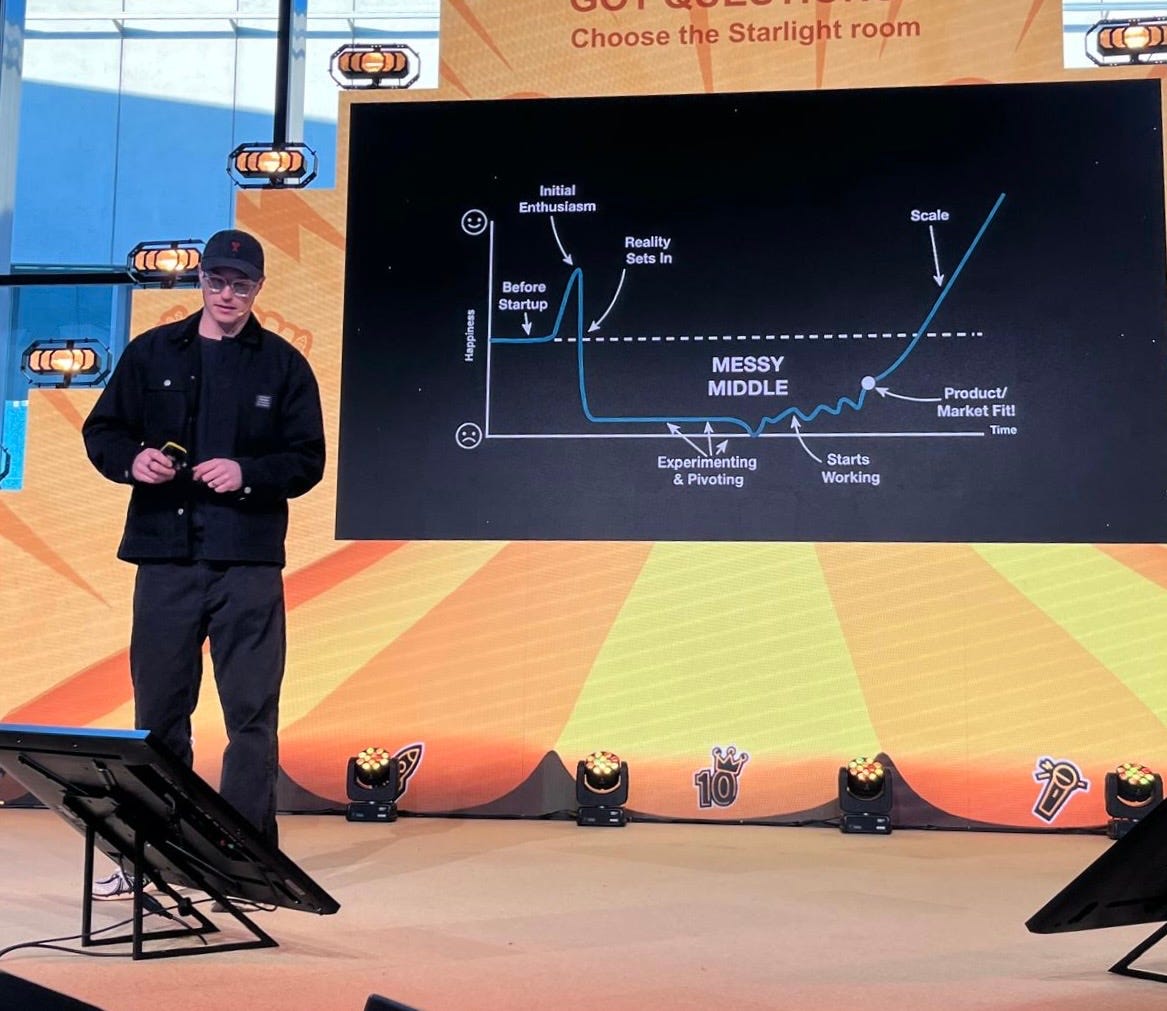
“Founders rarely talk about not dying as a startup,” Tiri regaled us as we leaned in to hear more. “Just staying alive long enough to become an expert isn’t a very sexy idea.”
The Brink of Bankruptcy
In 2014, the team rocked up to Tallinn’s Viru shopping centre with a high-tech, full-body scanner keen to print 3D action figures of customers. The customers, on the other hand, were not so keen. It was a failure to launch.
“Most people just stared us in the face,” Tiri recalled. “We hadn’t done a single customer interview. We were so excited about the technology... that we forgot to ask ourselves, who are we building this for?”
By 2015, the founders were sitting in their first investor’s office with a few weeks of runway and no traction. While the team feared the end, it was the words of their investor, Marius Ghenea, that flipped the situation on its head.
“Running out of money shouldn’t be a reason that you quit. The chances you’ll ever assemble a team with such a strong chemistry... are slim to none. You just need to survive.”
Hardware is Hard
The move to a scalable “egg-shaped” scanner booth brought new challenges. To lower costs, they built prototypes using Raspberry Pis and old DSLR cameras. To understand the user experience, they spent months acting as “the creepy guys in the background,” taking hundreds of pages of notes on how people interacted with the booths.
Despite the hustle, Tiri noted that hardware remained an uphill battle. Getting it into places was challenging, literally, there was a story about it not fitting through castle doors in Vienna, one about playing pass the giant egg with forklifts, and a booth that accidentally took down the airport terminal system in Tallinn.
“Hardware is really hard,” Tiri admitted. “I have mad respect for people building it, but that wasn’t the path for us.”
The Move to the “Right Place”
A Startup Wise Guys’ mentor asked them, “Where are your customers?” Their customers were in the U.S. “Why are you here?” was the next question.
Tiri and co-founder Timmu Tõke bought tickets to Los Angeles. The reality was far from glamorous - sharing a tiny apartment and a bed! Their office was a Starbucks and they were even robbed twice during their stay.
“It was exactly the right place and time for us to be there,” Tiri said. The tide started to turn in their favour. When Facebook rebranded to Meta, the world finally caught up to what the team had been preaching for eight years.
The Netflix Acquisition and the Long Game
Ready Player Me eventually evolved into a software-first SDK that powers avatars for companies like Adidas, Dior, and BMW. The 2025 acquisition by Netflix—intended to bolster the streaming giant’s metaverse vision—was the big shiny medal at the end of a 12-year marathon.
“What kept me going for over 12 years was the founding team and their mission,” Tiri said.
“Life is too short to work on shitty ideas. It takes the same amount of energy to work on small problems as it does to work on big problems.”
The audience was keen to hear how they decided to sell to Netflix, but he told us that would have to remain a mystery. However, he did leave with a message for the next generation of Estonian founders.
Referring to the scene from Finding Nemo when Nemo is ready to give up and Dory sings to him “just keep swimming”, Tiri says it’s a great metaphor for startup life.
“Your job is to just keep swimming until the world catches up,” he added.