
Under the Radar: Defence Tech’s High-Stakes Corridor Diplomacy in Munich
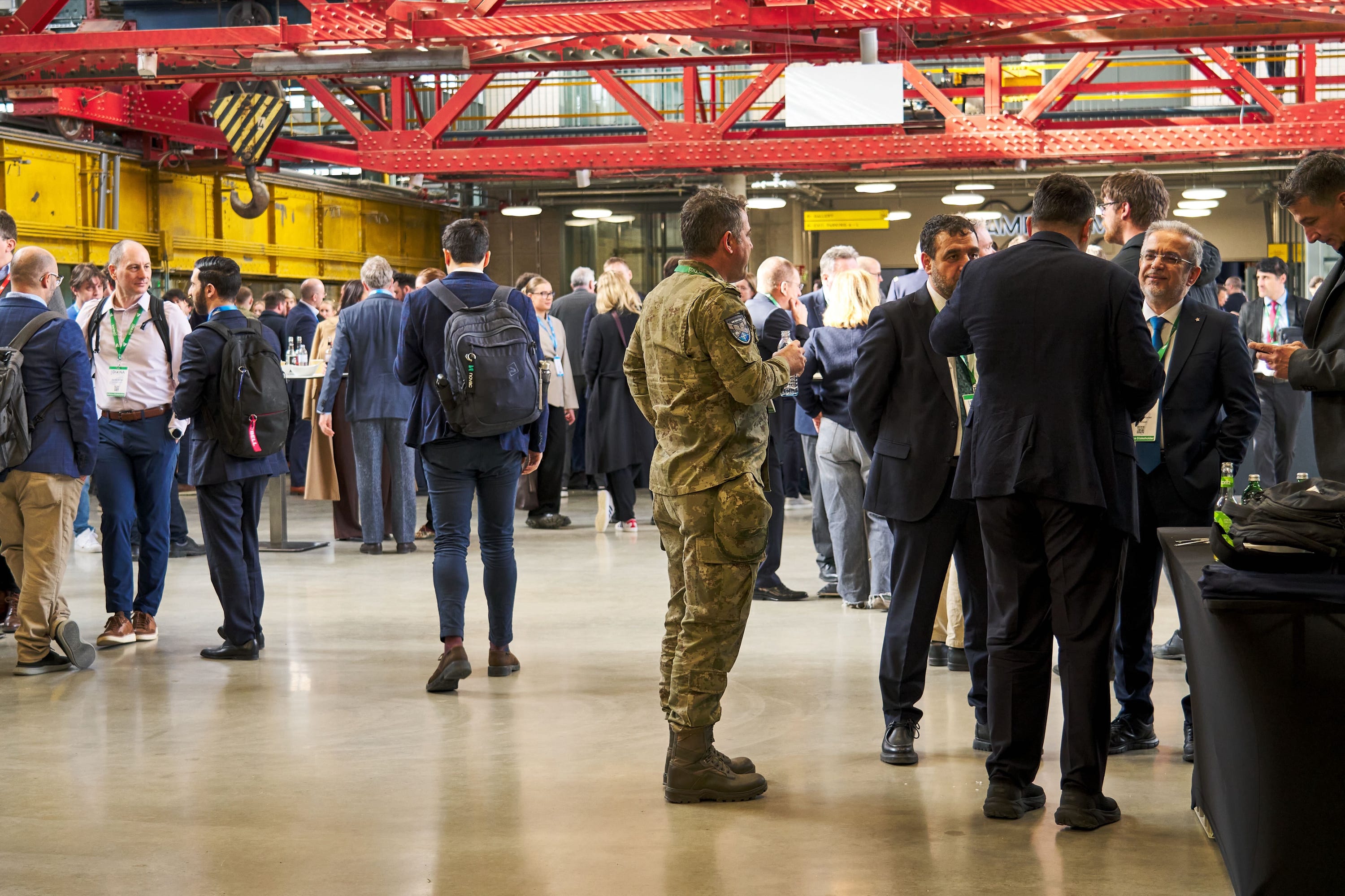
Away from the televised main stage of the Munich Security Conference, a "Defence Tech Summit" of a different sort was unfolding in the hallways.

Within these corridors, the conversation has shifted from theoretical policy to the urgent mechanics of the new defence economy.
As the self-appointed “fourth pillar” of the startup ecosystem, Fomo.Observer has been tracking these discussions, which bridge the gap between private innovation and national security. Our sources on the ground describe a mood that is “oddly familiar and newly urgent,” as the startup community — traditionally focused on growth —confronts the hard realities of defence.
Familiar because the same lines about unity have been repeated since 2022. Urgent, because conversations seem to be moving away from rhetoric. Among other places, closer to Moldova.
Budgets are rising, and drones are everywhere, but we already knew that.
Munich was about the part that can speed up or slow down everything and anything, like financing, bureaucracy, and political alignment. The so-called “boring” part.
The European Union has a defence package worth up to €800 billion aimed at strengthening readiness before 2030.
Some people I spoke with joked that the events held across two hotels were really hot.
Others said the climate/temperature was due to political reasons. People are sweating and waiting for April and the next parliamentary elections in Hungary, where Putin’s puppet is holding a veto over many EU decisions.
Are the EU member states prepared to give up the veto in decision-making and move to qualified majority voting instead, or not?
The sentence investors heard and have been discussing ever since
Ursula von der Leyen’s Valentine's Day speech on bringing the EU mutual defence clause to life and treating it as an obligation landed differently in defence tech circles.
In her speech, she called for faster decision-making in the EU for defence-related issues and for more partnerships with third parties, especially the UK.
For years, the European Union talked about strategic autonomy. Is now finally the time to unite, or, like Estonians like to say, put our bread in one joint cupboard?
If Article 42(7) of the Treaty on European Union is treated as operational rather than symbolic, member states would be expected to plan military capability collectively rather than nationally.
Europe can run out of basics fast. We’ve been through a couple of crises and seen it firsthand. Steady defence production would mean fewer potentially dangerous gaps.
When countries stop buying everything separately and start buying more cohesively, companies receive steadier and larger orders rather than random contracts. That makes it easier to hire, invest, and scale. While this could boost the EU’s military readiness, it would work against startups, benefiting larger and larger producers.
Producing more of the same systems lowers costs and simplifies maintenance. Buying as a system also means allies can work together without chaos when things get real.
There’s the unity part, right there, without the rhetoric.
The official speeches did not reveal that Europe wants to industrialise defence per se, but they did signal that it is building the machinery that makes such industrialisation possible.
In startup founder language, this means:
Europe is trying to turn collective defence into structured procurement, rather than just political statements.
This would nudge the buyer to behave less like 27 separate cultures and more like a coordinated system (over time, of course). That would mean shared risk and requirements, as well as shared financing and production planning.
Money is following the speeches held.
EDIP channels €1.5 billion into Europe’s defence industrial base between 2025 and 2027, with the explicit aim of making joint procurement more attractive.
It sits alongside the European Defence Fund, which finances collaborative R&D. While the EDF focuses on creating the technology, EDIP focuses on helping industry scale it. The final purchasing decision, however, still belongs to member states.
Brussels is trying to link funding to co-operation, so that joint procurement and manufacturing capacity no longer remain only a political goal but become a reality through collaboration.
Drones, air defence, and ammunition keep showing up as gaps because Europe still cannot produce and deliver fast enough.
Then the Council of the European Union started turning that into actual implementing decisions. Last week, on February 11, it adopted first-wave decisions for eight member states, and it also cleared a second wave, which includes Estonia and is expected to be formally adopted today, February 17.
This is relevant because these long-maturity funds are meant to unlock bigger orders. Europe is not only talking about “buy European” but also about “buy trusted,” with a pathway for (euro)partners to jump on board.
This could also have some implications for startups. What we heard from Munich matches what our columnist, Kaari Kink, has been seeing from the NATO DIANA innovation end. One of the key themes was how significantly procurement timelines can be shortened. Examples were discussed of how, through NATO DIANA’s Rapid Adoption Service, some nations can move into prototyping arrangements much faster than through the traditional years-long cycle.
Estonia: Small but mighty?
This could represent a significant opportunity for Estonian defence startups, which have grown rapidly since Russia attacked Ukraine. Estonia’s deep-tech startups grew their total turnover by 20 percent to 430 million euros in 2025, with defence driving much of the momentum, Startup Estonia recently said. The release highlighted revenue leaders such as Milrem Robotics, Threod Systems, and Blackwall, and noted that 161 million euros were raised across 22 deals.
This might sound like NATO is ready, but the Wall Street Journal column last week on drone warfare was a sobering moment. We need more. A lot more. WSJ reported on a wargame that suggested Europe is vulnerable, making Baltic defence the core lens of their story. The columnist also argued that NATO has seen the future in Ukraine and is not prepared for drone-heavy warfare, referencing lessons from simulations and exercises conducted.
Is Moldova a litmus test for defence?
Foreign policy could be the cheat code for understanding how the market will move.
Moldova, lying between Ukraine and Romania, is not an EU member. It also contains the unresolved reality of Transnistria, where Russian forces remain stationed. That geography keeps Moldova within Europe’s security equation even when the public discourse remains diplomatic.
Since Russia’s invasion, the EU has largely treated Ukraine and Moldova as a political pair.
Moldova is not legally tied to Ukraine’s accession. But politically, the EU has chosen to treat them in tandem so far.
That alignment could change if Hungary’s block persists.
Moldova signals Brussels “perimeter expansion.” Perimeter expansion signals broader demand categories. That is relevant for companies building cyber, comms, ISR, resilience, and infrastructure tech.
Hungary matters because EU defence coordination depends on unanimity and political cohesion. Hungary’s April 12 elections, which could remove the most Russia-leaning leader in the bloc, could interfere with Ukraine-related funding decisions and the implementation of EU financing tools.
Many key EU steps still require unanimity. When one government slows progress on peace talks with Ukraine, Brussels has to decide whether to wait or change the sequencing.
That affects how quickly coordination happens and how smoothly financing and joint procurement move, so for defence tech behemoths, Moldova is a directional indicator.