
FOMO.05: The Portuguese Connection
The Wilson Effect: Why Founders Need the First Follower to Turn Introverted Genius into Global Growth.

The first thing I notice upon entering the Estonian Business School on Lauteri Street in Tallinn is just how well-dressed the students are. I live near the University of Tartu’s Viljandi Culture Academy down south, I’m used to scruffy beards, nose rings, billowy trousers that dangle a few centimeters above the ankles. At the Estonian Business School, I can see that the shirts are tucked in, the jeans are crisp and blue, the chins clean-shaven, and cosmetics tastefully applied.
This is their world, I think, as I ascend the steps to the top floor, the world of the startup people. These characters just want to cut to the chase. They might not just be about the money, but they do like it. And what’s not to like? Play your cards right, and you could be standing on stage at the end of Latitude59 holding an enormous check, like some giddy, grinning game show contestant.
When actors dream, they dream of plays. When the startup people dream, they see unicorns.
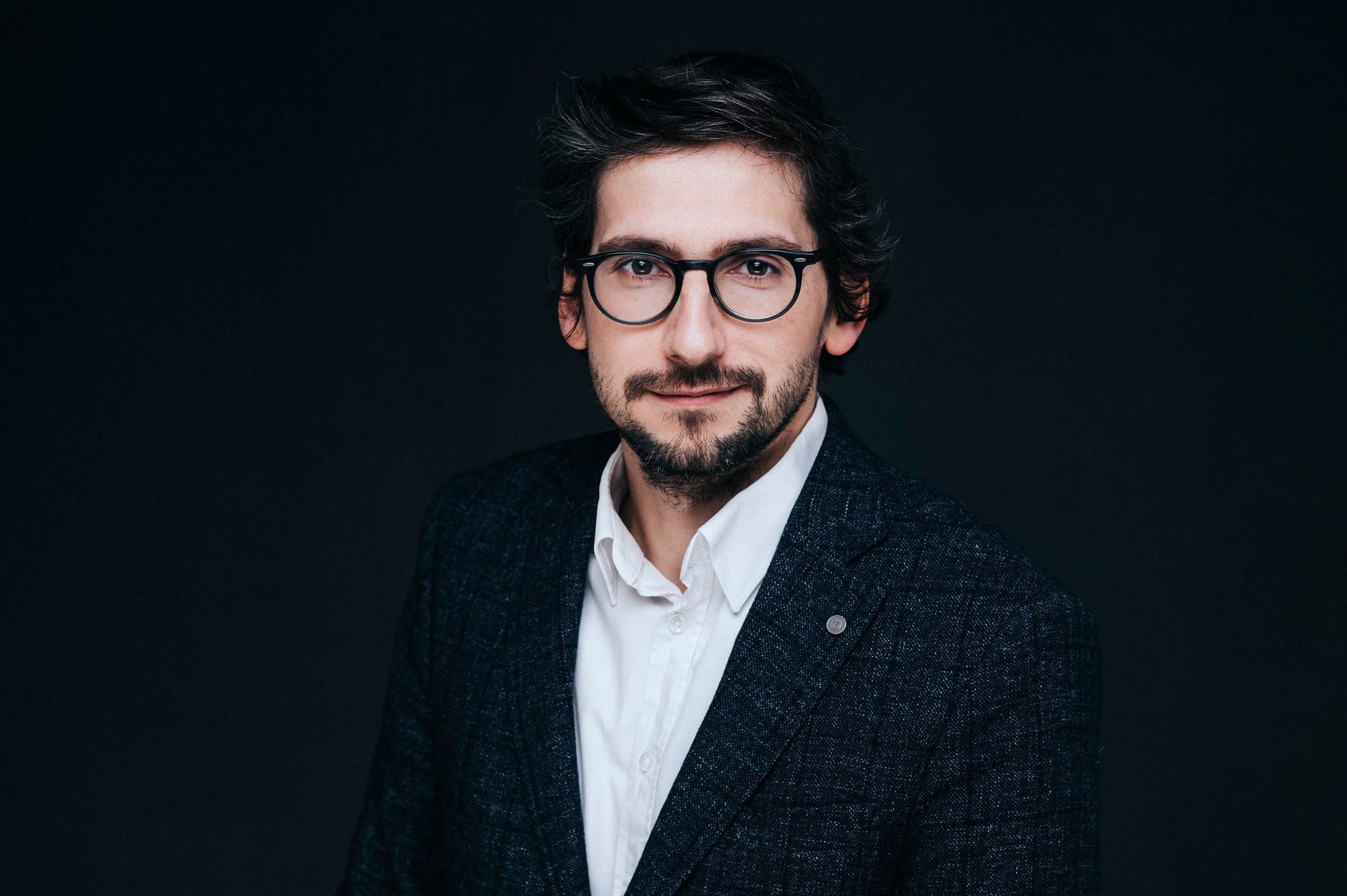
On the top floor of this buzzing hive of big ideas and entrepreneurial spirits, a different kind of character is present. His hair has gone a little gray, his skin is tawny, even in February, his features are not of this land. Here he stands in the communal kitchen with a mug of hot coffee steaming up his glasses. He looks out on the rooftops of downtown Tallinn, where yellow men stand among cranes constructing the city. Even in the winter cold, they are there, laboring away. He’s been here a while now, more than two decades. He hasn’t seen it all, but he has seen a lot.
His name is João Rei. A self-described Portuguese explorer. His company is called eID Easy.
The Philosophy of the First Follower
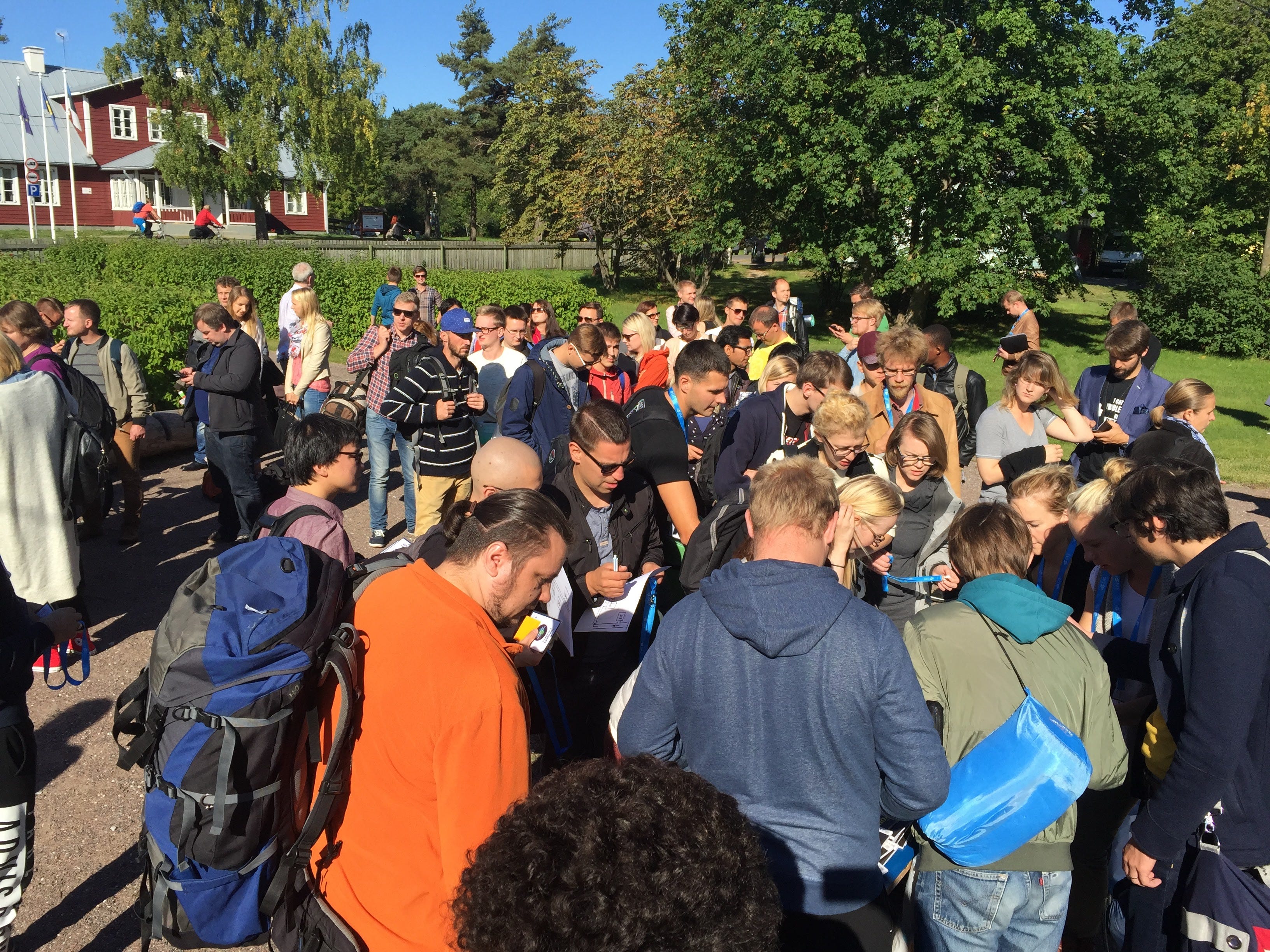
Rei was present at the genesis of eID Easy. It happened during a hackathon on Vormsi in the summer of ‘15. His group was trying to enable a customer of a bicycle rental shop to authenticate himself with his Estonian identity card using a login similar to how Facebook allowed users to access other sites. A developer quickly strung some code together, and by the second day, Rei found himself as a pitchman, offering the plug-in to others.
That is one explanation for how he wound up here in this office. There are several explanations.
“I was so nervous on that first pitch,” he recalls. “It’s not something that I’m good at, off the cuff.”
But some of the other teams were so impressed that they were ready to buy the plug-in, but in the end, Rei’s team decided to make it open source. There would be no public procurement for it, so the best they could hope for was a nice dinner. Making it open source seemed easier and fair. But it did get them thinking about building something bigger around the concept of digital signatures and electronic identity. “I was there from the beginning,” Rei says. Eventually, Margus Pala, Karli Palts, and Mats-Joonas Kulla joined, and the core eID Easy team was in place.
For a few years, the company was kind of dormant, says Rei, but when the COVID-19 pandemic hit, the founders realised that the time had come for their technology and know-how.
With their flagship API, the company now enables users anywhere to log in, authenticate themselves, and sign away, whether they are using eSignature platforms in Japan or Jamaica. Secure interoperability. eSignatures and eSeals. Making the Estonian ideal of being able to do everything online from anywhere at anytime available to the masses. The offering has been adopted in sectors from banking to law to healthcare. It also caught the attention of partners abroad, and eID Easy recently redomiciled to Ireland after closing a €2.4 million round led by DeepIE Ventures and Boole Investment Syndicate, both based out of Cork. And so, an Estonian startup co-founded by Portuguese engineer João Rei is now led by CEO Maoiliosa O’Culachain. No one is quite sure how to say his first name.
“We just wing it,” says Rei.
Rei has continued to be an evangelist for the company, and in recent months, he has hosted eID Easy meetups in Tallinn, Dublin, Zurich, and Stockholm. He’s also a mentor and host for Garage48 and regularly sits on panels at Startup Day and Latitude59, where he has, at the tender age of 44, become something like an old hand, a seasoned, sought-after industry veteran. Rei is now a wise startup guy, surrounded by founders who are a few years out of high school.
But what does he have to say about the Estonian startup scene that hasn’t already been said?
“What I will say,” he offers while leaning over the coffee table, “is that there is an unspoken value in being the first follower.” A first follower, as Rei defines it, is the devoted number two. While a founder has ideas, the first follower is the one who believes in them and springs into action.
When he speaks, I am reminded of the late Beach Boys founder Brian Wilson, who once had a sandbox built in his living room, so he could feel the sand beneath his feet as he composed new songs on his piano. Wilson was a sensitive introvert, a genius, a recluse, and his band wouldn’t have existed if he hadn’t had his brothers and cousins to egg him on and take it out on tour.
According to Rei, Estonian founders are sort of younger, tech-savvier Brian Wilsons, only more so. They sit in their living rooms composing “Good Vibrations,” hoping someone will listen.
The first follower is the one who thinks, ‘We have something here, let’s do something with this.’
“Most founders in Estonia are, how do I put this politely? On the spectrum,” says Rei. “I don’t think there’s a founder in Estonia who isn’t on the spectrum, which makes it very difficult to start a company and have people join.”
This is where the first follower must show up and validate them. Founders cannot do it alone, he says. In a way, the first followers are crazier than the founders. Once others see that someone trusts the one with the big ideas, more collaborators line up.
“We always talk about founders. Founders, founders, founders! But I’m fed up with it,” says Rei. “We need to talk about first followers.” When I ask him if he is a first follower, he shrugs and says a little. “It’s kind of a mix,” says Rei. “It was more like a Jobs and Wozniak type of thing.”
The Small Miracle of SMS Parking
Rei grew up on the outskirts of Lisbon, on the opposite end of Europe. When he finished high school, he went to the Universidade Nova de Lisboa, where he studied environmental engineering, was involved with the school radio station, and founded the university chess club. He came to Estonia for the first time in 2004, where he was impressed by the ability of people to pay for parking via SMS. By the time he arrived, SMS parking had been available for four years.
While it might seem like a small footnote in the grand tale of e-Estonia, with its online voting and online divorcing, SMS parking is still not available in many cities, where one still must locate a parking meter, have the right change, and make sure they get back to their car before their time expires. “In Lisbon, parking was always a mess,” he says. “When I saw people paying by SMS for parking, I was just blown away.” For Rei, it was evidence of an innovative mindset, where change could be quickly implemented and where there was a greater appetite for testing new ideas.
“In Portugal, the mindset was, why bother? Someone has already tried and failed,” he says.
Rei had always had a knack for entrepreneurship, and he elected to return to Estonia to obtain a bachelor’s in international business administration at Tallinn University of Technology, which he followed up with an MBA, graduating in 2011. His education dovetailed with the success of Skype and a profound shift in the Estonian technology landscape. When he arrived at TalTech, the great success story was PlayTech, the gambling software development company. The idea was that Estonia would continue to serve as the backend for international IT companies. Estonian developers would handle the coding and grunt work, while the projects would be imported.
Out of Skype, though, many startups bloomed. “Skype was a school for many people,” says Rei. “The management that came, the principles that were applied.” Product owners within Skype went on to found their own companies, and Startup Wise Guys and Garage48 were established. Slowly, the pieces of the ecosystem came together, but at first, Latitude59 was just a cozy get-together at TalTech for a small group of people. Today, it’s the premier regional startup conference, with mechanical unicorns, vegan food trucks, and multiple stages.
“I think Latitude still retains some of that small size. It hasn’t gone crazy like Slush or Web Summit,” says Rei. “I think that’s an advantage, which is obviously good, that it still retains that.”
From Skype, as he says, came Transferwise and Pipedrive. And from these companies, even more came. There should be more en route, Rei predicts, as a third startup wave is fomenting. What’s needed to make it happen is a few first followers to validate ideas and get things moving.
“I believe there’s a lot of talent in Swedbank, in bigger corporations,” says Rei of this coming wave. “I think we need to unlock that talent away from the corporate world, away from the traditional business world, away from the established startups.” The ideas, he insists, are there.
For his own part, Rei entered the startup world from an unusual corner. After years of working in marketing at Idea and other companies, he was asked to mentor startups at Garage48, even though he had never worked in one. “When I think back, it was so immature,” he remembers. “Each startup would say what they did, what they wanted to achieve, and we would act as if we had the answers,” he says. Rei’s strategy was to ask penetrating questions that would get these scrappy young startup founders to figure out what they wanted to do, where they wanted to go.
He is still Portuguese, as he notes, even after so many years here, and shares the same “cultural DNA” as Pedro Álvares Cabral, Vasco de Gama, and, the big one, Ferdinand Magellan.
“I think there’s definitely a legacy of wanting to go and explore what else is out there,” says Rei.
When partners meet this Portuguese explorer representing an Estonian company, they are sometimes surprised. “It does make some people wonder what the hell I'm doing so far up north,” says Rei. “But when I start talking about what we do, and the space we occupy in the digital identity field, then Estonia makes sense. Estonia is still seen as a leader in this space.”
Transformative Years
Rei is active on LinkedIn, but not overly active. Every week or so, he posts an update. At the end of December, he characterised 2025 as a “breakout year for digital trust,” and said that eID Easy “rode the wave.” More companies are relying on digital identity services at scale, and eID Easy grew accordingly. eSignatures revenue was up 159% year over year, eID authentication spiked 116%, and eSeals jumped 104%. The company shipped more than 65 improvements focused on user experience and interaction flexibility, and its employee count doubled. In addition to becoming Irish, eID Easy’s team works across nine countries.
“Operations do remain here in Estonia,” Rei underscores. “The company operates from here.” Being from Estonia, he stresses, opens doors in the field of digital identity.
In addition to bringing on Irish investors and an Irish CEO -- who is not related to the investors, professionally or by blood -- eID Easy partners like DocuSign and Dropbox have their European offices in Ireland, and Ireland is seen as a springboard toward a North American presence.
“We had a fantastic ‘25,” acknowledges Rei. But as he stares out at the Tallinn skyline, his gaze is fixed on December 2026, when the EU will begin mandating that every member state make a digital identity wallet available to its citizens. By the end of 2027, organisations will be required to accept those wallets for identity verification or authentication when required by law.
“There’s a disruption coming to this sector,” says Rei. “By the end of this year, 400 million people will have in their pocket a version of their identity, a digital identity on their phone.”
Other stars are aligning. Google and Apple are also entering the digital identity space, says Rei, and will eventually come to Europe. “The digital wallet wars are about to begin,” he says.
Will one come to dominate? Probably not, predicts Rei. eID Easy thrives in market fragmentation, and the appearance of US digital identity sails off the coast of Europe only raises questions about data and identity sovereignty, big questions that will take time to be addressed.
“I think it’s going to be a very interesting space,” says Rei. “And I think this year is definitely going to be a transformative year.”
When asked what advice he would give his younger self, if he could go back in time and mentor himself at Garage48, Rei pauses a bit and responds, “I think I would keep the same approach I had then. I would ask more questions rather than immediately give advice.” Life, he says, is not without its challenges, and one has the privilege of one’s own challenges. The main question is, why this challenge? He asks. Why this industry and not another? Why this today?
“If you can figure that out,” he says, “and are passionate enough, it’s much easier to wake up on Monday when it’s snowing outside, and you don’t feel like going to the office and get up and go.”
Elsewhere this week:
Estonia to mesh with the Nordics via a collective for founders

Have you heard of the Mesh Collective? No? Well, listen up as it’s coming to Estonia soon - it could be fruitful for our founders in the region. I caught up with Anders Mjåset to unravel more about his ambitious network.
MARI LUUKKAINEN: The 2% Trap: Why VC Bias Isn’t the Root of the Female Funding Gap

The conversation about women in venture capital is stuck in a loop. Every year, a new report drops showing that female-founded startups receive roughly 2% of VC funding. Every year, the same conclusion: investors are biased, the system is broken, VCs need to do better.
Under the Radar: Defence Tech’s High-Stakes Corridor Diplomacy in Munich

Within these corridors, the conversation has shifted from theoretical policy to the urgent mechanics of the new defence economy.
 | A guest post by
|