
FOMO.06: Know when to hold 'em, know when to fold 'em
Marek Kesküll talks about the emotional runway of a first time founder

At Startup Day, when I had just slipped into the back of a panel session to give myself a palate cleanser after an intense meeting, I heard a guy on stage talking about ‘emotional runway’. Turned out that guy was Marek Kesküll, and he was talking about the closure of his startup Scorestars.
My ears pricked as it’s one of my favourite subjects to discuss in the land of startups, what happens when startups fail, and before my very eyes and ears, a guy was spilling it all on stage - a palate cleanser indeed!
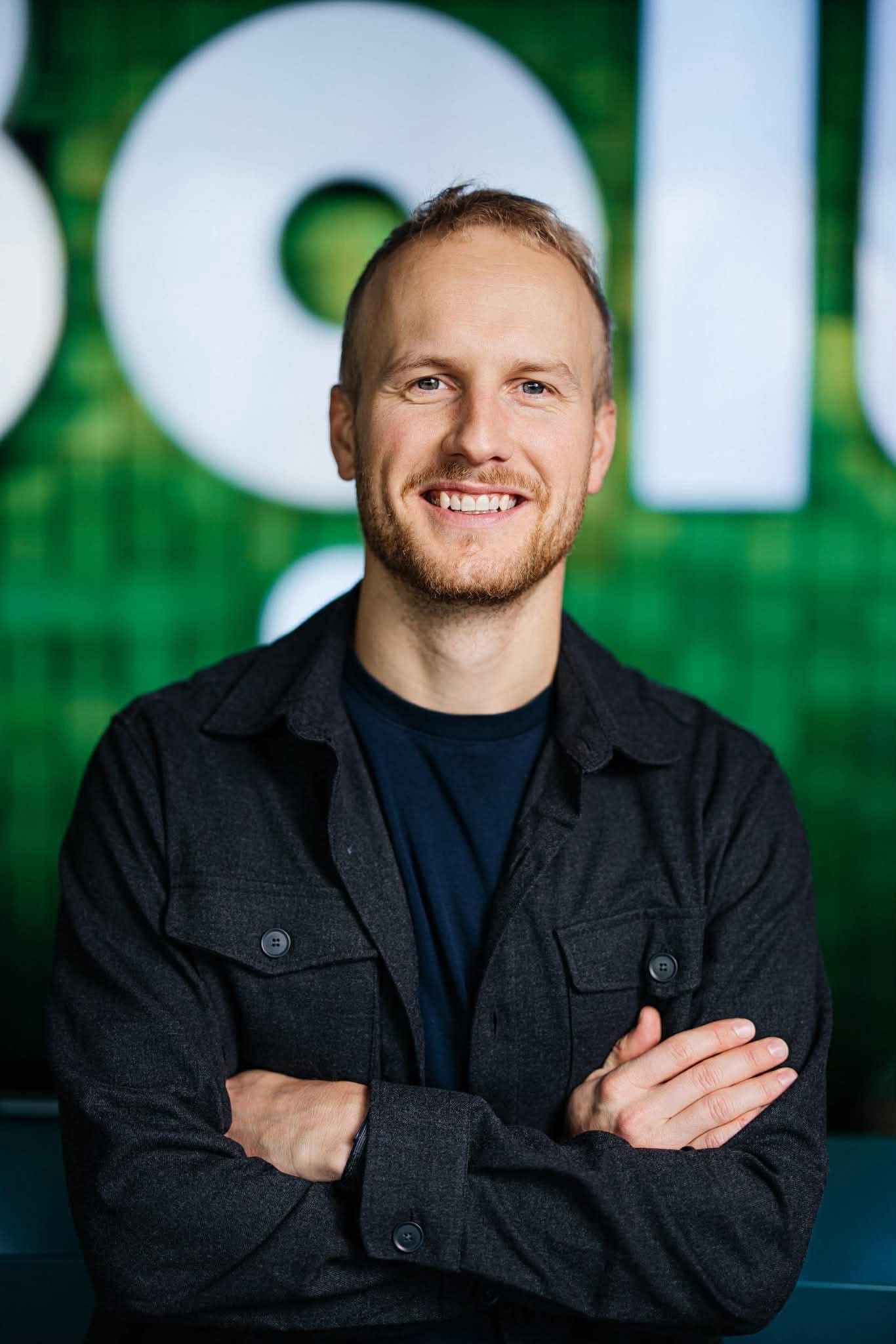
The emotional runway Kesküll talked about essentially ended his first foray as a startup founder and CEO. And I guess what interested me more was that he went on to say that at the time of closure, the startup still had plenty of financial runway. This was a story I felt might be of interest to our Fomo.Observer readers, so of course, we hit him up.
“In the first year or 18 months with the investors, I felt like there was an axe on my head. Worrying about what if I'm not going to make it after promising something to the investors. You asked if that was part of the emotional runway, then, yeah, I think it was like 75% for me, because I was the CEO. I was the founder who promised something to the investors and I couldn't deliver it. This is something that I thought about every month, and it drained me emotionally,” he tells Fomo.Observer.
There was no need to pursue Kesküll to meet and chat; he obliged straight away, and that’s how I found myself inside the Bolt offices having a sober conversation about knowing when to cut your losses and dealing with failure.
I emphasise the fact I’m sober here because my first time talking to failed founders (wording which sounds so cruel) was under a much different influence. As an inexperienced journalist trying to find her niche in Dublin, years ago, I was asked to attend a startup event - it was a startup wake. I walked into a church, turned theatre, to find an actual funeral taking place, the priest was Irish PR guru Paul Hayes, and the dead were founders whose startups had, well, died.
The eulogy was a conversation about what caused the deaths, and as we bid each company farewell, we each raised a glass of Teelings whiskey and knocked back a shot. There were four startups, and I had arrived on an empty stomach…I think you can tell where the story is going. I’ll wrap it up by saying the night literally changed my career (for the better), my view of the founders' journey, and, admittedly, I haven’t touched whiskey since!
In the more comfortable and less morbid offices of Bolt, I get to asking Kesküll about the demise of Scorestars, a company he’d joined the founding team of Martin Lond and Samuel Vard after the project had formed and became the CEO. His passion for sports was what had piqued his interest in the project, which was a fantasy sports platform; his competitive nature was what sealed the deal.
“I’ve always been a little bit competitive - if I was playing some sports with my friends, then we’d always say let’s bet on something - whoever wins will get the prize,” he says as we talk about why he was interested in what started out as a side gig for him. Adding that ‘playing with other fans’ and ‘having skin in the game’ were what appealed to him about the Scorestars product. Creating a product for someone like himself.
At the time, he was working in customer software development and leading teams in his 9-5 job, so it was natural for him to do the same in this after-hours startup.
He’d become somewhat of a professional salesman during his university years, spending three of his summers selling books door-to-door in the States. “Bibles and educational books, six days a week, 14 hours a day, in Indiana, New Mexico, and Utah.”
“I learned a lot from selling books. I learned the language, an entrepreneurial mindset, sales, how to read people, and so on. So I used that skill when I was building my startup and when I was fundraising - it’s a huge, crucial step that I did before I got to be a startup founder.”
The team would work on Scorestars (originally known as Cryplect) for around two years as a side gig before they would leave their day jobs to go into the company full-time.
“Every week we met together, we planned our tasks for the next week, etc, etc. So this, I think, was really important in the beginning as well because people have lives after five. They have kids, they have other hobbies, sports, etc. I think this was a really important part when we were so early-stage, building something we didn’t know if it even worked. From there we built, we scaled, we made some business, and then we, then we got to a point that we needed to focus on this full time,” he says.
With the business scaling outside of Estonia, it was time to take external investment. In 2023, they raised €725K from Trind, Startup Wise Guys, Portugal’s 3 Comma Capital, and angel investors.
At this point, we get to talking about fantasy sports. Kesküll gives me his own sporting background; he was a champion volleyball player in his youth, but now his main sports are padel and spikeball, the latter of which he has to explain to me and says he’s a coach for. I’ve seen it in my local park before but had no idea it was so competitive, but I guess it is a sport afterall!
Basically, the Scorestars product was a virtual competition between fans. “We iterated many times,” he tells me. “We used some gamification tools to bring the fans in every day. We did some scratch and win tickets, so you can win something, and had some other sports games inside the app as well.”
The company expanded from Estonia to Turkey, Israel, other European countries, and South America. They even worked with the basketball governing body, FIBA.
“There were lots of cool plans, but plans are plans and execution is a different thing,” he explains. The monetisation model was just not working out. “We couldn’t get that machine going - we tried every possible way. There wasn’t a sustainable model for us. Then we decided to do a small pivot - like 180 degrees,” he says.
When the pivot happened, the company scaled back, parting ways with a founder and most of the employees.
“They understood it perfectly, no emotions there. Because I think the art of letting people go during the building of a startup is just how you present it. What’s the actual plan or strategy that you have? We were building a product that didn’t need any marketing during that phase, so we parted ways with the marketing team as well,” he explains.
Then the remaining team of three set themselves a sales deadline of July 1st, or they would fold the company. This was not a money problem; they had plenty of financial runway left. This was about the emotional toll it was taking on them. They needed the win and had clearly decided that if they didn’t get it, they would not let it beat them down.
“We didn’t have any successes,” says Kesküll as he tells me what led to this decision. “Success means that you get a new customer or you’re growing 20% every month, or whatever the success is - we didn’t have those small wins. We definitely had a few of them, like signing great contracts, but in terms of numbers and looking at the business metrics, we didn’t see any wins throughout the months we built. This was kind of the hard part, and this drained us emotionally, because we were always questioning ourselves - is this really something that’s going to be big?”
“You're emotionally so dry that you start thinking, maybe we should close down the company. This was the point that we said, “Let's set the deadline.” We communicated this to investors, and this is what we did,” he says.
The 1st of July arrived, and no customer had been secured, so the decision was made. How did that make him feel? “Instant relief, and then I started calling investors right away,” he says it with such conviction, I do not doubt his feelings for one second. He made 15 calls to investors and began to wind the company down. This was the summer of 2025, and in Estonia, it takes a year, so it is still not technically finalised.
“To be honest, I would say all of them were supportive,” he says when I ask how those calls to investors went. “I think 60% of them said to me that if I ever found something new, then give them a call. It was really supportive.”
“After I did all those calls, it was like super relief. I thought this wasn’t so bad - I didn’t die - I still have my family,” he says.
After taking the summer off to relax on his home island of Saaremaa, which I’m now learning has standing beef with Hiiumaa over which in fact is the best island as I’m told this time ‘its a common misconception that Hiiumaa is an island’, Kesküll decided that he wasn’t ready to be back on a startup wage again despite some interesting conversation so he’s now an operations manager in Bolt.
I’m curious how he manages to go back to life as an employee after building a startup.
“The founder has 24/7 responsibility, right? The responsibility to build the business, to improve the business, to grow on a monthly basis, to provide reports to investors, etc. Right now, I don’t have to do it. During the night, I can sleep, so yeah, it’s a little bit of a different life, definitely,” he tells me.
In other positive news, a month or two after folding, they sold their IP, which gave them a bigger pot to divvy up among the investors looking to recoup some funds from the closure.
As the premise for this interview was about emotional runway, he tells me how he dealt with that part of his life - he told me he discovered the benefits of going to therapy.
“I could just talk about concerns, problems that I had, someone would listen and give me some feedback on those things and help me to kind of fix my thoughts and so on. I think that helped me a lot during the end, the last few months. I really, really recommend founders to start going to therapy in the first months they start building their startups,” he says.
My favourite question to ask at the end of an interview is ‘what’s the dream,’ but I somehow feel that if I ask him now, it might be something he still needs to work out, so I ask the next most important question…will you go again?
“Once a founder, always a founder. I don’t know when and how, but I’m always open to all possible scenarios that life has to offer to me,” Kesküll says. I have a feeling there’s another founder story in this guy yet. I’m glad I saved my dream question for another time.
Startup of the Week
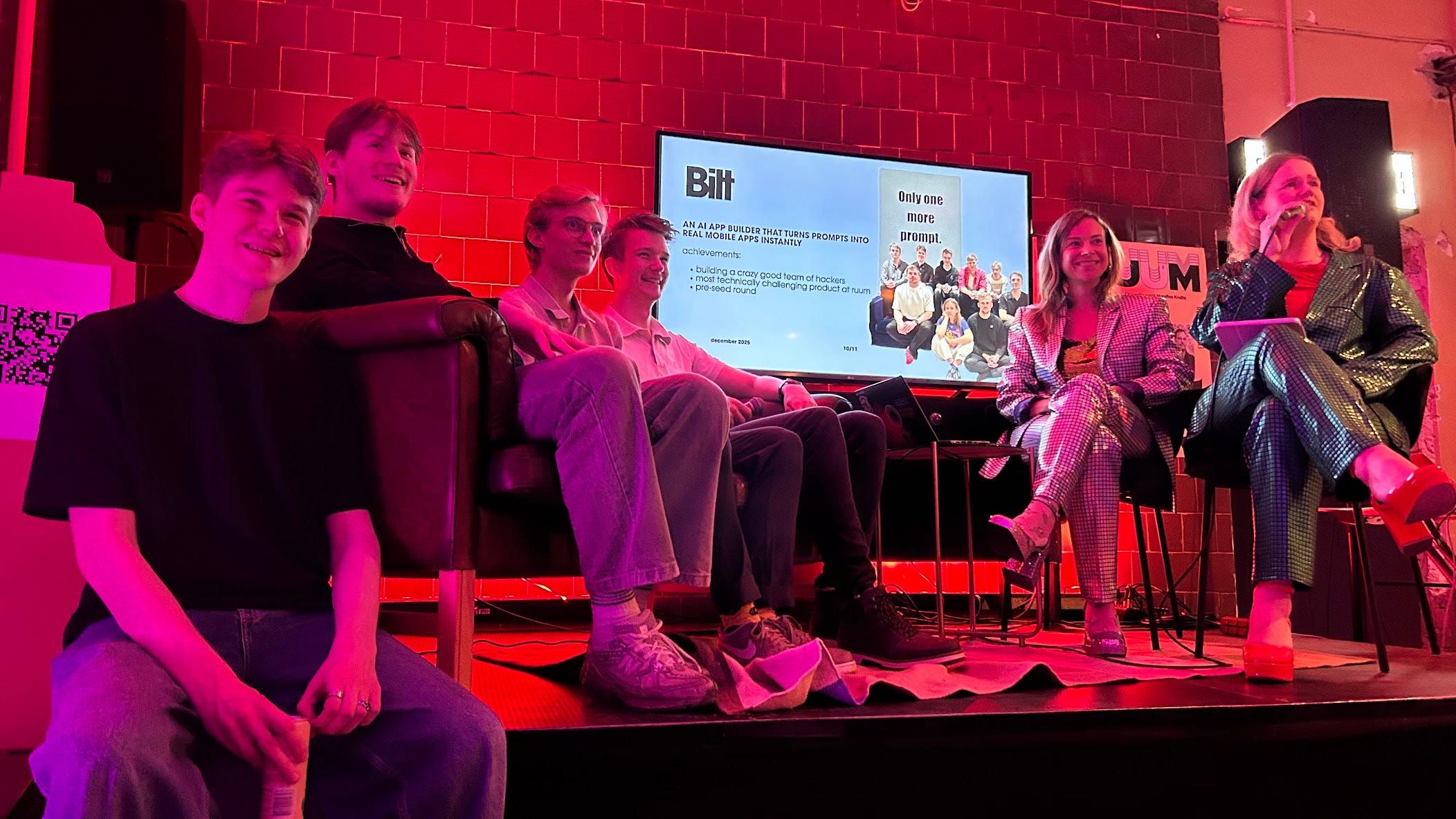
We are not very original here, starting this series with bilt.me, a winner of Estonia’s first hacker space cohort last fall.
Bilt started as an internal tool to turn prompts into apps for their own experiments. Then friends asked for it. Then friends of friends. They realized they weren’t just building apps; they were building the tool they always wished existed.
“We built this after spending months developing our own mobile apps and hitting the same wall over and over again: making mobile apps was still way too slow, too technical, and too expensive for most founders,” said Founder Uku Joost Annus.
Elsewhere: (Save Kaari’s startup NATO playbook if you are in defence tech.)

Frankenburg adds €30 million to its arsenal

Frankenburg Technologies, the Estonia-headquartered missile defence startup, has officially announced a €30 million raise, which will see it build its missile manufacturing capacity in Europe. The Series A funding was led by Plural and followed by Estonia’s


