
KÄRT SIILATS: Estonian Female Builders Defy VC Statistics with One Event
While VC data shows only 25 new female founders per year, 66 women gathered at Kernu Manor to bypass the coding barrier and launch live products using "vibe-coding" AI.
When we talk about women in tech, we tend to focus on the missing ones. It is definitely true that women get intimidated out of the VC pipeline before they even get a chance to try, and those who do make the cut are believed less when they talk about the opportunity and their ability to take advantage of it. But today I want to make noise around those who do show up.
Based on my math, Estonia only has around 25 new female startup founders per year. (If we define a startup founder as someone who has raised capital). That number is too low, but it also means efforts to bring even one more into the fold really matter. And I believe with modern tools, it is not as hard as we think to add them.
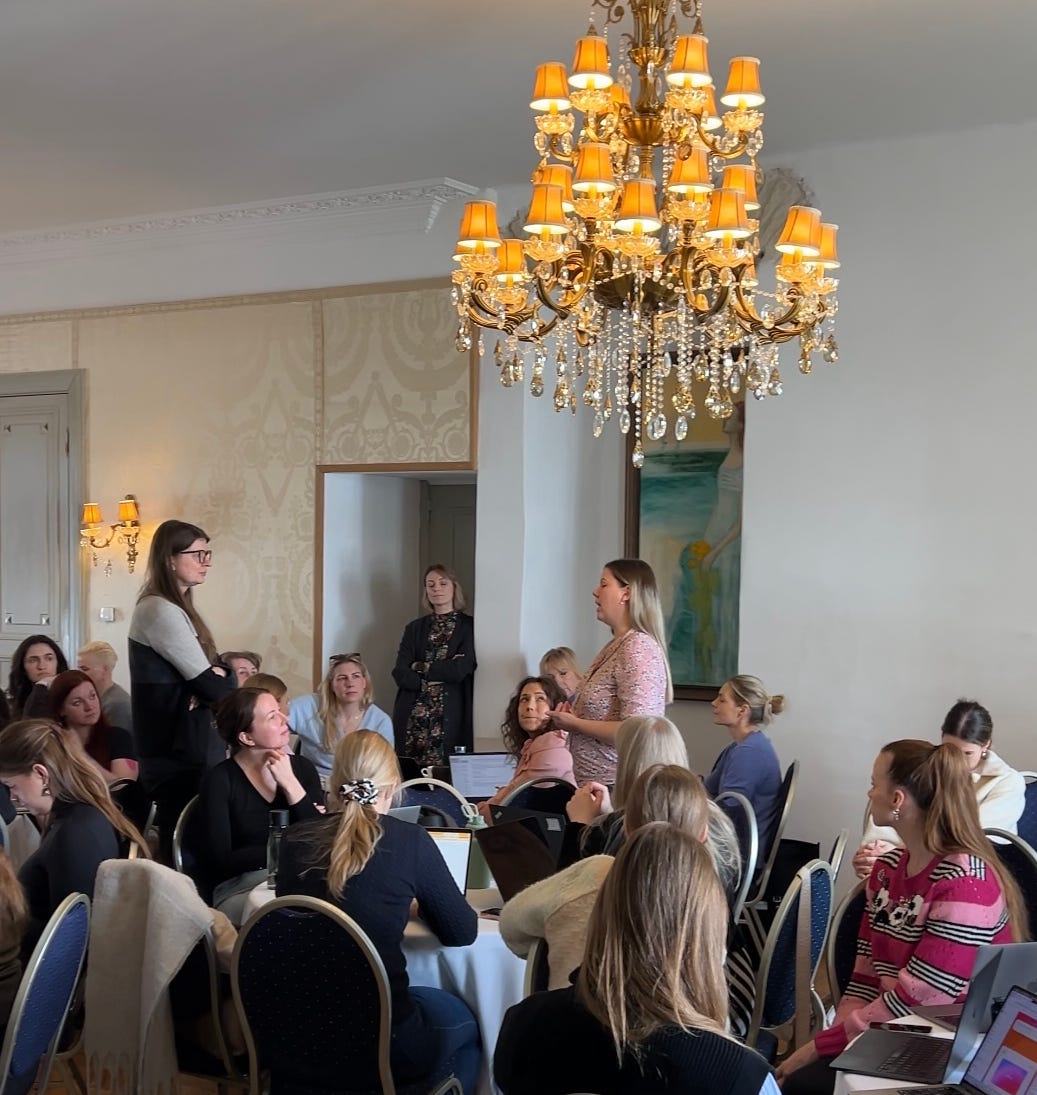
On International Women’s Day, using Luma for admin and Lovable for the building, we threw an event for 66 women at Kernu Manor, who kindly reserved space for us. We don’t need armies of administrators for these things anymore. It was supported by Linda Voeras, Enel Teinemaa, GoBeyond Capital, and a small amount of financing from Antler Finland.
The inspiration came from an event we held last summer, which included 20 female founders and 10 female mentors (including FOMO’s own Triin Hertmann and the vibe-coding OG Mari Luukkainen).


So what do women build when given the tools?
Yes, the usual disclaimers apply. You cannot clone enterprise SaaS in a weekend. Some things break down between testing and production. Security does matter. But again, maybe let’s focus on what does not break down and what can be fixed: of the 66 women who attended, four stood up at the end of the day and pitched what they’d built in a day. And not just a mockup, an actual product.
One participant unpublished later as she was not happy with the output yet. One project crashed mid-demo, but that happens at every demo day. It was an ambitious multiplayer game product, and I have all the faith that she will fix it. But two of the products actually worked and can be used right now. I’m happy with that ratio.
Touch Grass
Marleen Kubits built Touch Grass. A first-time vibecoding event participant shared her experience in a LinkedIn post: “Touch Grass lets you set your own screen-free goals such as no socials on weekends or 30 phone-free minutes every morning, and as you hit them, a virtual garden blooms. You can also add friends, see their status, for example, offline from social apps this week, state whether they’re up for a walk or coffee, and friends can also peek at others’ virtual gardens. No algorithm. No group chat. No performance. Just a quiet, growing garden that reflects what’s happening in your real (offline) life.”
Her reason for the build? “I’m a performance marketer and run ads on social media for a living - I built an app to help myself, and others use less social media. I needed something to track my progress, feel my wins, and actually reflect on how far I’d come. It was named after that thing people say you have to do when you’ve been online for too long.”
She also remarked that the fact that Lovable was free on IWD was a great move, “Yes, it spotlighted a real problem: there are too few women in tech, too few female founders. But thousands of people (not only women, but it was also free for everyone) tried out the platform, started projects, and fell in love with the experience.”
I know a girl
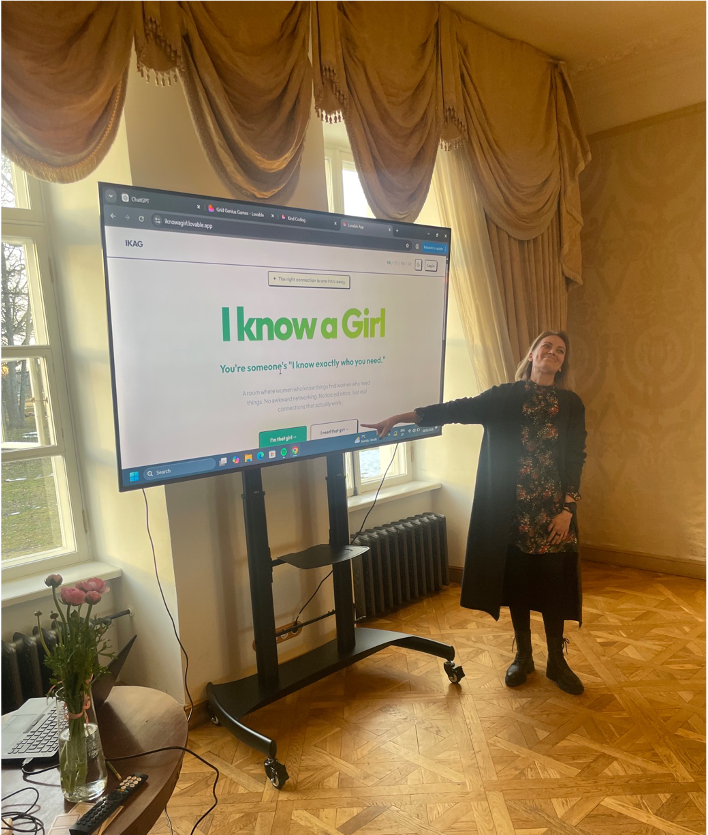
Jelena Oshepkova, the founder of Cyborgs, built I Know A Girl during the event. It is a room where women who know things find women who need things. No awkward networking. No forced intros. Just real connections that actually work. Go sign up and start sharing skills!
Jelena brought so much energy to her pitch and was also one of the only two people to try to solve other people’s problems by organising carpooling to the event. I now have a new foolproof test to identify founder mentality in people!
Teacher Ambassador Platform
Kelly Lilles, who is a founder of the extremely cool and useful ALPA Kids built an app for their teacher community. She said, “International Women’s Day well spent: building with AI - the idea of the event was simple but powerful: bring women together, introduce modern AI-powered development tools, and spend the day actually building something, even if you’ve never coded before.”
“During my drive there, I realised I had never actually used Lovable before. At ALPA Kids, we’ve mostly experimented with bilt.me when prototyping new family apps for the ALPA ecosystem. So I started thinking: what could I build today that would actually help our community? Very quickly, the answer became obvious. ALPA has an amazing group of teacher super-fans who constantly support us, for example, by sharing ALPA in teachers’ Facebook groups, recommending us to colleagues, and mentioning us at conferences and workshops - they do it completely organically because they believe in the mission,” she explained in a LinkedIn post.
“So my idea for the day became “A Teacher Ambassador Platform for ALPA Kids,” A place where teachers could sign up as ambassadors, see small community tasks they can participate in, help spread the word about ALPA, and receive recognition, rewards, or gifts from our store. Not because they have to, but because we want to recognise and celebrate the people already supporting us.”
“The best part of the day was seeing how quickly ideas can turn into working prototypes when you combine AI tools with a room full of curious builders,” she added.
More vibes
I wish I could describe everyone else and what they built in precise detail as well (and I will, especially if they sign up at Kind Coding where we’re gathering all the projects and resources and inviting mentors as well. But just a few others I noticed: both Silja Kirsimäe and Kadri Sundja built for their kids, but from different ends of things - Kadri to discipline hers and Silja to help with the homework at Kosmik.
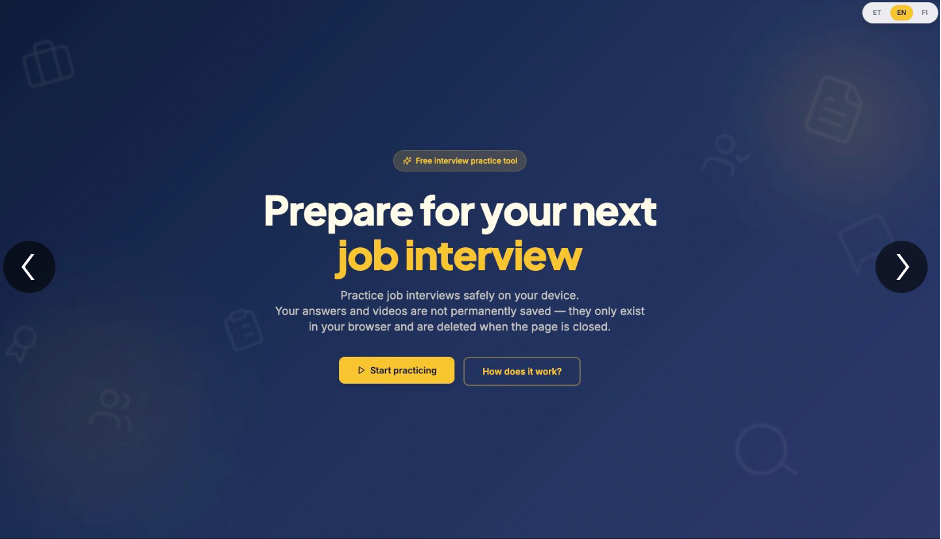
Liis Narusk built a bias-monitoring app that is highly relevant to International Women’s Day, which she hopes to publish soon. Both Triin Oselein from metsa.ai and Mari Stamberg built something visually very stunning, and Maarit Vabrit-Raadla built something we can all use already at Next Hire Prep (free for now, but she could easily monetise it).
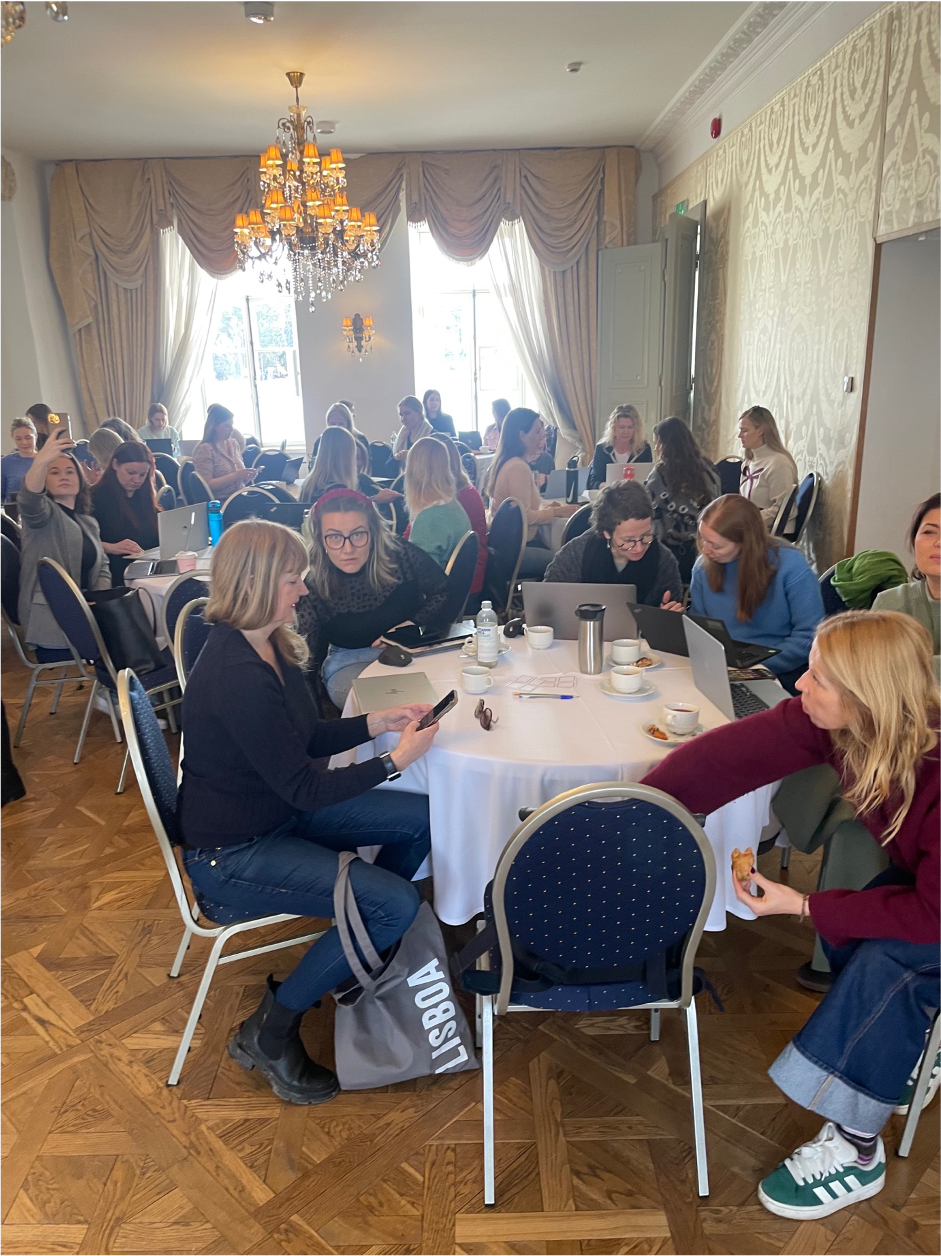
And I would once again like to applaud Helen Siirus and Teele Vallimäe for standing up and pitching their products; I never managed that at my first hackathons. And finally, just a big thank you to everyone who brought the energy - these events depend on the participant vibes to succeed, and the vibes were immaculate this time, as captured by Tania Husieva.
Why are we running these events? The added value of vibe coding for women
One reason is rational. The ratio is literally off. Untapped potential of half the population, resulting in lower than optimal GDP. And I would like to live in a country with an optimised GDP. Women have traditionally been in the service industry. Some of these are being replaced with cheaper products.
We need to counter this by having women own their products and not buy software from others. If women raise less cash, we’ll help them spend less and still reach the same milestones.
And in addition to an economic issue it is also a national security issue: one of the strongest ways to ensure the future of a nation is to have women, who are less stressed about their economic situation and able to enjoy professional fulfilment, while in charge of their own hours, thus being in an optimal position to make their preferred choices about ALL aspects of their lives.
Another reason is purely emotional. I am doing it to see the aha moment in their eyes. Not a lot of opportunities to create that in grown-ups. One of the participants who did the event at the Stockholm Lovable HQ, Juliana Camargo, building Glint said, “For the first time in a long time, I felt part of something real”. And Lovable’s Elena Verna echoes the sentiment, saying, “the real shift isn’t AI replacing humans. It’s AI replacing people who choose not to bring their humanity into the work.”
The first thing they build probably won't be the big thing. And for many, it stays the last thing they build. But some get bitten by a bug. For some, it is a feeling similar to sitting behind the wheel of a car for the first time. Horizons expand. New destinations become possible. You are no longer dependent on others to take you there.
For others, it is a feeling similar to seeing your parents fail at something for the first time. “Oh”. “They’re just human”. And they realise how much of coding is just myth-building, and how much of it is just simple common sense. Linking bits to other bits and Googling in between. We’ve been told to leave it to professionals, just as generations of actors and comics were told to leave it to professional gatekeepers to decide who gets seen. But then YouTube came on the scene, and it turned out that market preferences often differed from those of the gatekeepers.
We also want to test the hypothesis that women are more comfortable validating their ideas with potential customers when they are armed with an actual working product prototype, rather than just words. We already see it working with the product links added to LinkedIn posts.
Perfectionism is the enemy. We try to live by that motto. So we just jumped in without looking and have been iterating on our ‘embarrassing MVP’ of the event series ever since, based on user feedback and our own sense of what is achievable.
FOMO.07: The 365-Day Network: Moving from Campaigns to Consistent Support

At this week’s editorial meeting for FOMO, where we discuss the topics we want to cover and the plan for the week, we spoke about doing something for International Women’s Day (IWD) and how we could do it in a way that would support the ecosystem and also that people would want to read.