
“Stop Talking About Your Product”
7 Social Media Lessons from ClickUp’s Chris Cunningham

RIGA - At TechChill, Chris Cunningham, the early team of the project management unicorn ClickUp, delivered a blunt wake-up call to founders and marketers: the era of high-end, over-produced commercials is dead, replaced by a desperate consumer craving for the “real”.
Drawing from his journey - from a four-person team living in a house to running a global firm with $535 million in funding - Cunningham outlined a tactical playbook for winning on social media in 2026.
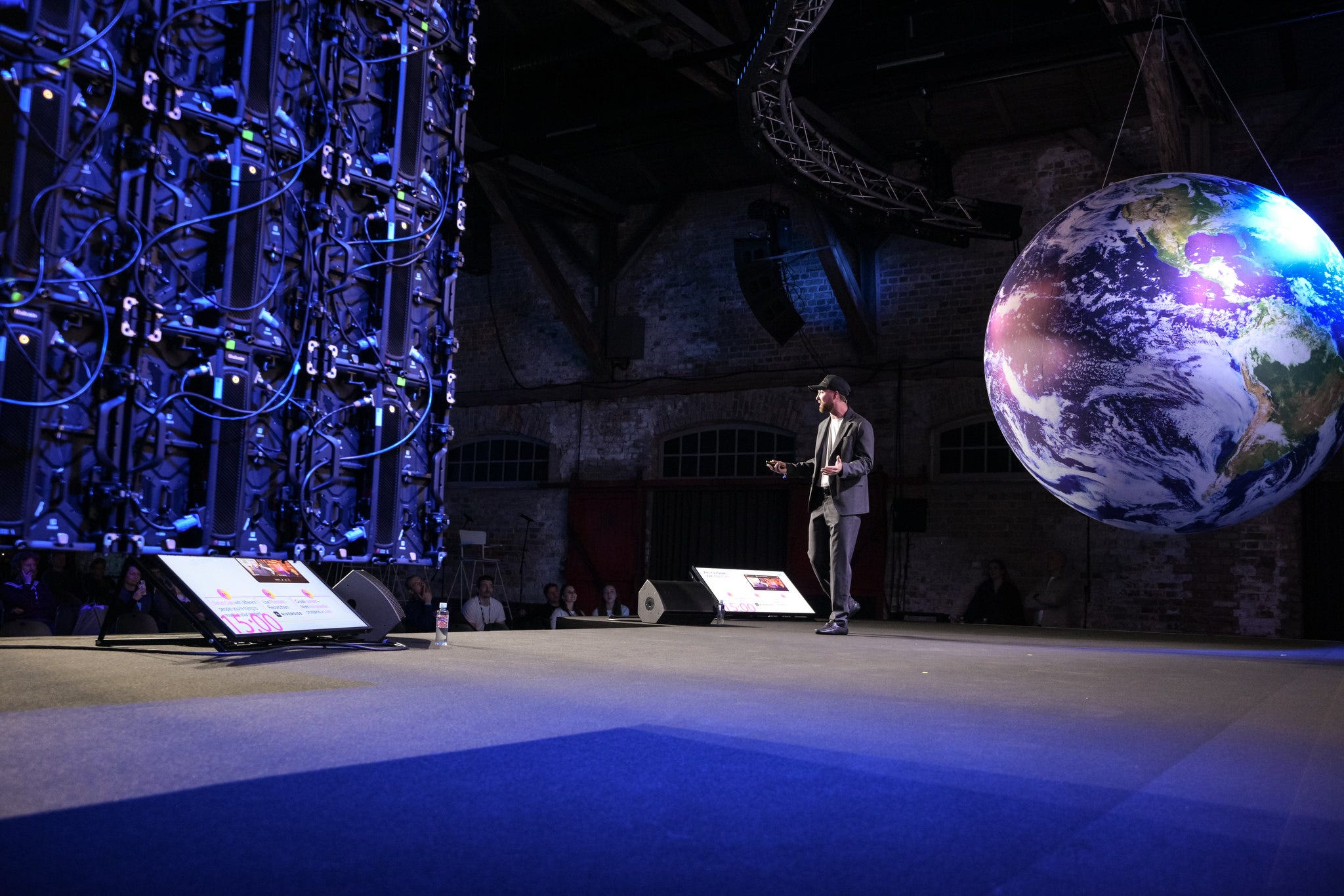
Here are the key takeaways from his “ClickUp on Stage” address:
1. Master Your “True” ICP
Cunningham argued that most companies fail because they only know their Ideal Customer Profile (ICP) on paper.
The Advice: Go beyond basic demographics like age and gender.
“I mean you really need to know your ideal customer profile... interview them, talk to them. Once a week, I speak to somebody—might be a customer, might be a potential customer. I take a 20-minute call... and I’m just asking them things: What do you watch on social? What do you learn from? What makes you laugh?”
2. Follow the “Rule of Three” Before You Post
Your content must serve a specific purpose for the viewer, not the brand’s ego.
The Advice: Ensure every post does one of three things: Adds Value, Teaches Something, or Makes Them Feel Something (ideally, laughter).
“Most people just post to post... ‘Here’s an image of our team.’ No one cares. They don’t. Especially if you’re trying to reach new people”.
3. “Stop Talking About Your Product”
Cunningham insists that constant selling is the fastest way to be ignored.
The Advice: Build trust by becoming a thought-leader first. If you teach someone how to be better at their job, they will naturally look to your software when it’s time to buy.
“I have millions of followers now because I don’t talk about the product... If you keep talking about your product, it’ll never go viral, no one will care, and no one will share it”.
4. Build a “UGC Machine”
Authenticity cannot be faked through a corporate brief.
The Advice: Hire creators, but don’t over-manage them. Let them learn the product and talk about it naturally.
“People can feel if something’s fake. They’re done... Reach out to this creator. Say, ‘Hey, let me train you. Let me help you.’ Let them make the video natural”.
5. Utilize “Internal Influencers” on LinkedIn
Building a brand page from scratch is difficult; leveraging human faces is more effective.
The Advice: Pick 4–5 key leaders within your company (CEO, CFO, COO) and create content for them that focuses on real business situations.
“What is more valuable for you: Hearing someone brag about themselves... or just saying, ‘Hey today, this is a conversation I had with my CEO. This is what happened.’... Get more real on your LinkedIn”.
6. The “ABCD” Formula for Short-Form Video
Cunningham uses a systematic approach to finding viral hits on platforms like TikTok and Instagram Reels.
A: Adopt a Winner. Post for 30–50 days, find the one video that outperforms, and double down on that style.
B: Better. Innovate on what has already been done or copy successful formats with your own twist.
C: Capitalize on Trends. Jump on trends when they are hot, but don’t let them be your only content.
D: Differential/Unconventional. Experiment with “random” ideas that break the generic mold.
7. Human-Guided AI Content
While ClickUp uses AI tools like Claude for copywriting and brainstorming, Cunningham warns against “lazy” AI content.
The Advice: Use AI to remove “busy work” (like drafting social copy from meeting notes), but keep a human in the loop for the final script and performance.
“I don’t like watching AI content... Right now, people want real... Humans have to guide it. You can’t just lean on AI to make the script. You can’t just lean on AI to build the video”.
Clicking Up: Taking on the giants

RIGA - In 2017, the founding team of ClickUp lived in a single house, working seven days a week to build a productivity tool designed to replace the fragmented “app-for-everything” landscape. Today, with 1,300 employees and a valuation in the billions, the company is eyeing the Baltic states as its next frontier in a David-and-Goliath battle against tec…