
FOMO.09: A meeting at Kyiv train station
This week in Fomo.Observer: Farsight Vision, Messente exit, SkySelect funding, Triin Hertmann, Kärt Siilats, Alejandro Jimenez, and more

We met for this article in Kyiv. I’ve only recently gotten to know Viktoriya Yaremchuk, but we want to catch up in person. She’s a busy woman, so it’s a ‘passing ships’ situation; she has a spare moment while she waits for a train, and we settle in for the chat.
I’ve just come from a cyber resilience forum and am rattling off a tale about how Signal’s founder told the audience we should not use Telegram. She agrees so strongly that I suggest I should delete it myself. Looking at me, she says something to the effect of “you could do it now, and clear all its data from your phone too”. I do it, partly because I respect her opinion, and partly because I know I’m in a ‘trust’ situation here. If they don’t trust, they don’t talk.
In case you are wondering, my quality of life did not decrease because I no longer have Telegram access, which I only used for certain contacts…in case you were considering your own cleanse.
Yaremchuk is CEO and co-founder of one of Estonia’s defence tech companies Farsight Vision. It recently announced a €7.2 million Seed round led by Axon Enterprise, including Estonia’s SmartCap Defence Fund, Radix Ventures, and reinvestment from Darkstar. If I’m being accurate, I should call them an Estonian-Ukrainian company as it was founded in Ukraine by Ukrainian co-founders, but we are lucky they chose Estonia to register. Maybe it wasn’t luck, maybe it was the startup charm.
“There were other options, but we thought of Estonia, because it was very digital. It was very easily managed remotely, and we thought that from a taxes, talent, and regulation standpoint - it’s all pretty straightforward,” Farsight Vision’s CEO and co-founder Viktoriya Yaremchuk tells me as I quiz her on why they landed here.
Farsight Vision is an AI-driven geospatial awareness and response system supporting unmanned systems with up-to-date terrain and situational awareness.
As well as ‘strengthening and broadening the business team in the Baltics,’ technical talent is a big draw, too. “As for technical talent, there are quite a lot of very talented people, especially in the sphere of XR and VR, where we started from, basically, and we will be continuing in this direction, and also in robotic systems and also computer vision.”
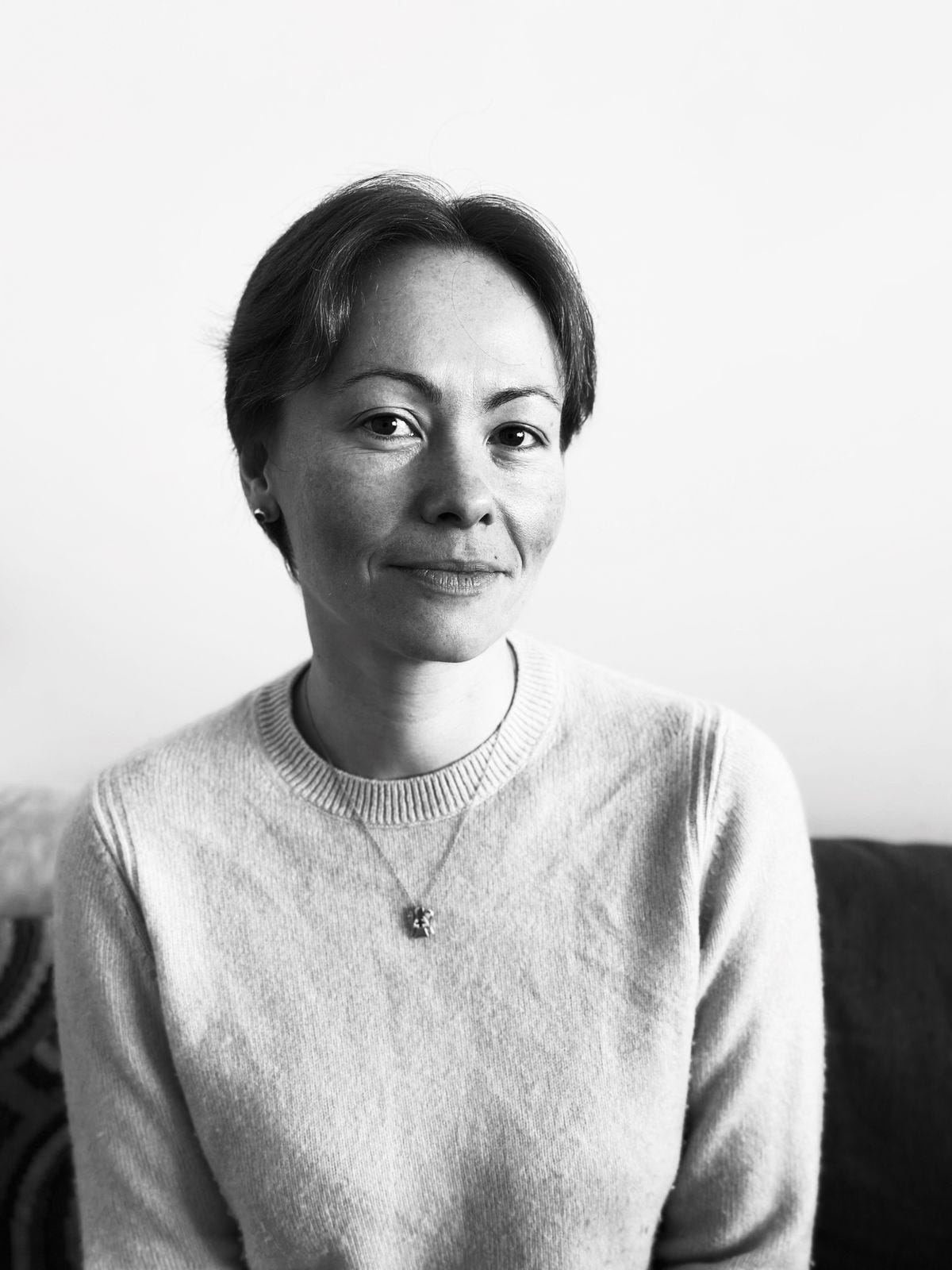
Yaremchuk starts to tell me about her life before she became a defence tech founder; in fact, I got a snippet of life before tech, too. The woman sitting in front of me used to teach during her studies for her PhD, and during her academic era, she set up a theatre group and became a producer and director. I’m totally hooked on this side of her that I wasn’t expecting.
I’m actually relieved to hear that there is another side to her. I’d met a fellow journalist earlier that day, who I’ve known since the full-scale invasion, and she’s traumatised from the war; I could feel it radiating off of her while she told me about having to change jobs. I think having a good grounding in something other than purely tech and war is an advantage for a founder in this challenging environment.
But I wonder if Yaremchuk still finds time to do it, I’m not sure when she actually rests. It’s in her makeup. I ask where the tech part came in, then, after the PhD, and she tells me she was learning that all at the same time. Are you spotting a theme here?
The courses she was doing were in “coding, NLP, machine learning - and then once you took one, you got interested in another - penetration testing, security testing, and databases,” she shares.
“When I was teaching, it was a long-term investment. It’s a great investment because you invest in people, but you see results very far away. While you’re doing something very technical, you invest a lot in how you do it, lines of code, and then you see immediate results. It’s very rewarding,” she explains.
“It’s probably like an adrenaline addict in a way, because when you do something absolutely new to you, it’s very hard, and you kind of suffer, but then you overcome it, and then you feel like, ‘Yay, I did it!’. I’m always doing something out of my comfort zone, and then I enjoy the satisfaction later,” she says.
This passion for problem-solving and delving into the uncomfortable parts of a project led Yaremchuk to work in IT, progressing to management roles and consulting, which she was doing when the full-scale invasion happened. Feeling like she wanted to do more than just volunteer and help get supplies to those who needed them, she honed her skills and drew on past experiences and landed on an idea that could contribute on the front lines.
She already had ideas of improving communication systems using visual data when her co-founder, Volodymyr Nepiuk, also joined. They decided instead of trying to ‘organise the chaos’, they would take the ‘eliminating waste’ approach.
“That was the idea, to help process all the data that is either streamed or recorded. I mean, it would sound like it’s very simple, and anyone can come up with the idea, but I think it all comes from the same principles of why software actually existed, to optimise manual work, to optimise time and bulk of knowledge, in another way,” she explains.
She tells me that when they started to work with drone data, people thought they were just wasting people’s time because, well, satellites. But what those people were not taking into account was the times when satellites were not useful, such as in cloudy weather, or even the sheer cost of ordering specific satellite data. So, they sought validation for their drone data idea from friends and relatives on the front lines, and they got it.
“In the beginning, we thought it was basically adapting some tools and some of the approaches that were used in civilian life - we made mistakes, it didn’t work, and we had to write it all over again, on our own,” she says. “We didn’t really know that it would be such a long journey and that we would get into so many challenges.”
“Nobody asks this, but if somebody did ask if I would do it all over again,” she confesses. ”I honestly don’t know!”
Aside from all the technical challenges, Yaremchuk says that one of the key challenges was adoption. “How do you test, at scale, your hypothesis, and how do you improve it? Because for both, you need to have this scale, and for the scale, you need to explain the value if it’s not visible from the beginning.”
“Luckily for us, the value was visible from the very beginning. My co-founder says it’s the fastest product market fit he’s ever seen. Obviously, unluckily, this happens because of the war, and unfortunately, because of the war, there was such a high appreciation and fast appreciation, because it was like, wow, we want it, and we didn’t have to explain to them how you use it.”
Once those testers saw the value, the next step was to figure out how it fitx into their routine. “That was the hard part, because, you know, in order to get the data, you need to conduct the flights. If the majority of the flights are conducted for the hit missions, how do you single out flights to get the recon data? And then how do we stream and change to specific angles?”
She tells me that there was a lot of ‘educating’ the decision maker. She’s uncomfortable with the word she’s used; I think it’s a respect thing. She feels strongly that innovators should never hinder the work of the front lines and gain their trust without being bullish.
“I think it’s very important to think about how you fit into the ecosystem, and how you speak with or negotiate with other people in the ecosystem - you are not competitors. You are trying to work with each other in order that all of this together brings more results. It’s probably the second hardest part of all of this story,” she explains.
“And I think this is also why, if you speak with end users in Ukraine, or even the end users outside of Ukraine, who understand the context of the front line in Ukraine, very often they get really angry or just disappointed, depending who you talk with, about receiving products and solutions from outside of Ukraine, because very often these innovators and manufacturers, they don’t try to become part of the ecosystem. They just bring some product, drop it at the doorstep, and say it’s the best,” she tells me.
We talk about how it was to build a company from nothing. Yaremchuk refers to her theatrical career; this is not the first time she has started something from the ground up. “I had no resources, no support, no sponsors, no governmental programmes, I had to build what I wanted - in a way that wouldn’t be too complicated to implement,” she says.
The man she is due to meet next has just joined the table as I ask her what she has learned about herself, on this journey, that has surprised her. “It turns out that I’m not the coward it thought I might be, so that was a good surprise. On the downside, and it's maybe a bad thing, I think I’m an adrenaline junkie, and I never thought of myself as a person who could get addicted to adrenaline,” she says.
The man who has joined us at the table pitches in, “for all of us Ukrainians, the really big surprise in the last few years is that even when we are all absolutely at the ultimate of exhaustion, we can make one more step, or two, or three.” As I’m looking across the table at the pair of them, it strikes me that they are exhausted, yet still making time for me.
I ask them, “What’s the dream?” Yaremchuk replies, “My biggest dream is that the war is over, and I specifically answered the war is over, because I don’t want to answer we won, or there is peace. The war is over - and it’s over on fair terms.”
They both begin to tell me about their dreams for the rebuilding of the country, noting that Farsight Vision is also collecting all the memories. “Some of the memories are really painful when you see what became of some of the cities and towns and so on, it’s really painful to watch, but it’s definitely essential to record the memory of them, of those places, in order for some of these places to be, and they should be, rebuilt from scratch. But we need to remember how it was.”
I leave them to it. Grateful for the time and conversation, and humbled by their attitude. Yaremchuk and I agree to meet in Tallinn next time, and I’m already looking forward to the chat. There is something very unique about this woman, and I have a feeling that so far our conversations have only just scratched the surface.
Inside Fomo this week, Triin shared her perspective on angel investing, and much more.


Dinosaurs or digital pioneers? The race to reskill Europe’s over-40 workforce

‘We need to expose everyone to AI’ was the resounding message at the Future of Work in the Age of AI forum in Riga this week.
After a full day of talks, keynotes and case studies it would appear that Estonia is on the right track with its programme to introduce AI to school age students via AI Leap Foundation, preparing them for future skills.
EXIT
Tartu-based Messente Communications, which was majority-owned by Mobi Solutions (the group behind Fortumo's success story), was sold to the U.S. cloud communications giant RingCentral. The transaction, registered in the Estonian Business Register on March 10, 2026, marks a significant exit for one of Tartu’s most resilient tech players. The value of the deal has not been disclosed, but Messente’s annual revenue topped 20 million euros, according to registry data.
FUNDRAISING
SkySelect, which brings AI to aviation parts procurement, raised $9 million in a round co-led by Verb Ventures and RockCreek. Investors included SmartCap Green Fund and earlier backers Bain Capital Ventures and Lux Capital.
“This growth funding validates both our early-mover advantage in applying AI to aviation procurement and the tangible value we’re delivering to customers,” Erkki Brakmann, CEO and co-founder of SkySelect, said in a statement.
“Legacy procurement systems and processes are fundamentally broken. Airlines invest over $40 billion annually in aircraft parts while simultaneously carrying $50 billion in excess inventory — a massive inefficiency that our AI-driven platform directly addresses.”
Buildit-incubated Slush finalist Velmenni, an Indian LiFi startup with Estonian legal headquarters, raised 3.3 million euros.
AWARDS
CybExer Technologies is shortlisted in two categories (for the company and product of the year) of the 2026 Cyber Security Awards. The award ceremony is in July, but the finalist badge serves as a "trusted" stamp for global enterprise sales.
Have a great week ahead!